
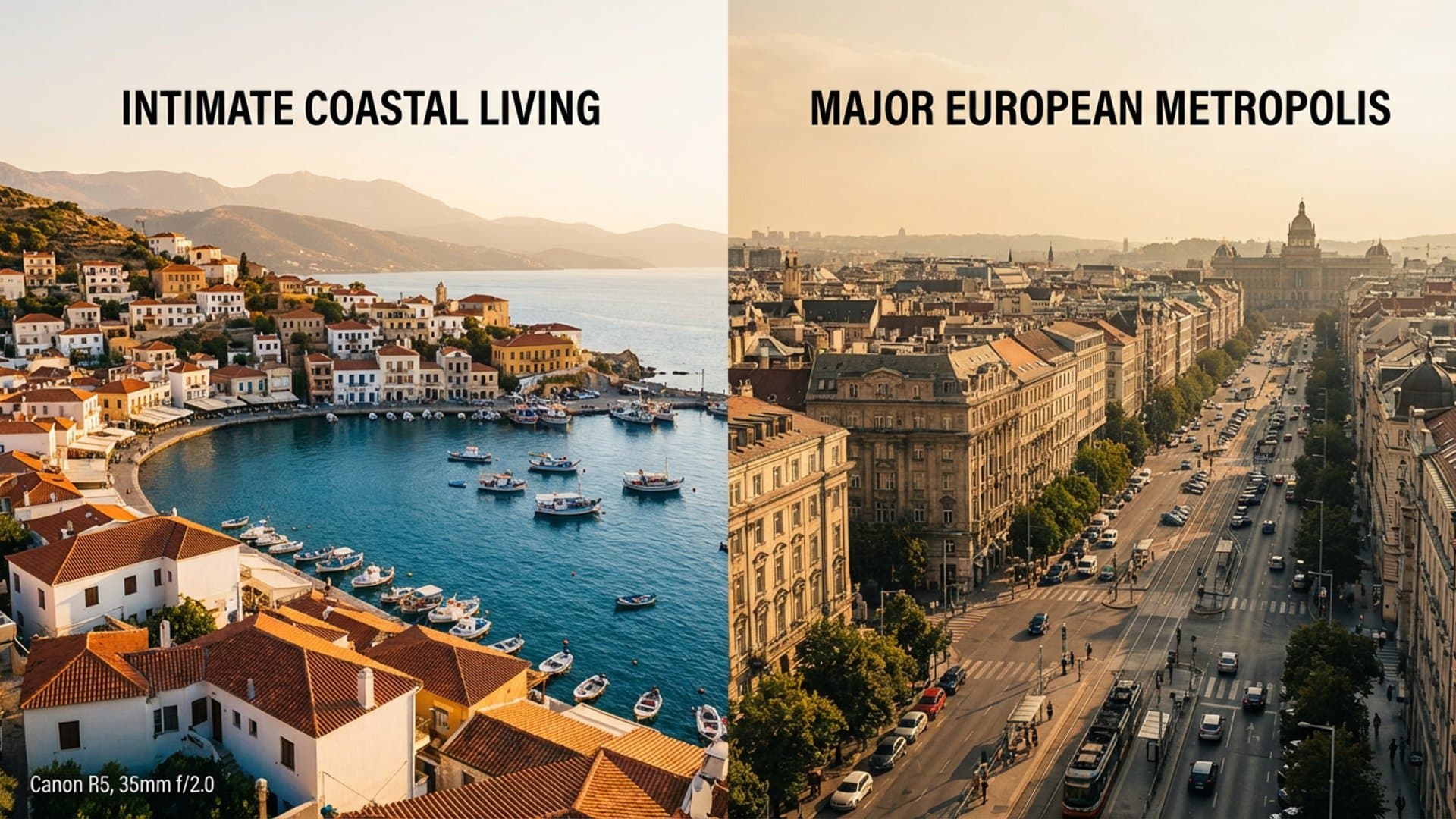
Quick Comparison
| Dimension | Málaga | Barcelona |
|---|---|---|
| Population | ~580,000 | ~1,600,000 |
| Property price/m² | €2,000–4,500 | €3,500–6,500+ |
| Climate | 300+ sunny days, mild winters | 250+ sunny days, cooler winters |
| Beach | City beaches + eastern coves | Barceloneta + northern coast |
| International airport | Direct flights to 120+ destinations | Major European hub |
| Cultural scene | Growing rapidly — 30+ museums | World-class — Gaudí, MACBA, opera |
| Nightlife | Good, concentrated in Centro | Exceptional, diverse, year-round |
| Cost of living | Moderate | High |
| Remote work scene | Growing quickly | Established, one of Europe's best |
| Language | Spanish (Castilian) | Catalan + Spanish (bilingual) |
| Tourist pressure | Increasing but manageable | Severe — overtourism is a real issue |
Property Prices & Value
This is where the gap is most dramatic. Barcelona's average property price per square meter is roughly 50 to 80 percent higher than Málaga's, and in premium locations like Eixample, Gràcia, or Barceloneta, the difference can exceed 100 percent. A two-bedroom apartment that costs €280,000 in Málaga's Soho or Pedregalejo would cost €450,000–550,000 in a comparable Barcelona neighborhood.
For international buyers with a fixed budget, the practical implication is clear: in Málaga, your money buys a larger property in a better location. A €400,000 budget in Barcelona gets you a decent two-bedroom in a good-but-not-great neighborhood. The same budget in Málaga gets you a renovated three-bedroom in La Malagueta with sea views, or a character apartment in the heart of Centro Histórico with change left over.
Barcelona's prices are supported by deeper demand (it's a global city with a larger economy), but they've also been affected by regulations: Catalonia has some of Spain's strictest rental regulations, and Barcelona has introduced moratoriums on new tourist rental licenses. For investment buyers, this regulatory environment adds complexity that Málaga (so far) does not have.
Lifestyle & Culture
Barcelona is the superior cultural city — and there's no honest way to argue otherwise. The Sagrada Familia, Park Güell, MACBA, the Liceu opera house, the Gothic Quarter's layered history, a contemporary art scene that's globally significant, and a nightlife infrastructure that rivals Berlin or London. Barcelona has decades of cultural investment and a population three times Málaga's size driving the creative economy.
Málaga's cultural scene has undergone remarkable growth — the Picasso Museum, Centre Pompidou, and thirty-plus museums have transformed the city in fifteen years — but it's not at Barcelona's level in depth or diversity. What Málaga offers instead is scale. You can know every gallery owner, attend every opening, eat at every good restaurant within a few months. In Barcelona, you could live there for years and not scratch the surface. Whether that's liberating or limiting depends on what you want from a city.
For daily lifestyle, Málaga wins on pace and accessibility. The city is compact enough to walk everywhere, the beach is a genuine part of daily life (not a tourist attraction you visit occasionally), and the social rhythm is slower and more grounded. Barcelona is more cosmopolitan, more diverse, and more stimulating — but also more crowded, more expensive, and increasingly strained by overtourism in its most desirable neighborhoods.
Climate
Málaga is meaningfully warmer and sunnier. Average winter temperatures are 3-5°C higher than Barcelona's, and Málaga receives approximately 2,900 hours of sunshine annually versus Barcelona's 2,500. Barcelona's winters are mild by Northern European standards but can feel damp and gray in January and February. Málaga's winters are bright, dry, and frequently warm enough for outdoor dining.
Summer is hot in both cities, with Málaga slightly warmer on average but both reaching 35°C+ in July and August. Barcelona has higher humidity, which some find less comfortable. Both benefit from coastal breezes.
For buyers from Northern Europe or the US who are moving primarily for climate, Málaga delivers more consistently year-round sunshine.
Choose Málaga if...
- Property value matters — you want more space in a better location for less money
- You want beach life as a daily reality, not a weekend activity
- You prefer a manageable city where you can know your neighborhood and community
- Climate is a primary driver — you want the most sunshine possible
- You want to buy property without navigating Catalonia's complex regulatory environment
Choose Barcelona if...
- Cultural depth is non-negotiable — you need world-class museums, architecture, nightlife, and diversity
- You want a global city with a large international professional community
- Career opportunities matter — Barcelona has a far larger job market and tech ecosystem
- You prefer a bigger, more cosmopolitan urban experience
- You want to be part of Europe's top tier of cities and don't mind paying for it
Next Step
If Málaga is feeling like the better fit, Denise can help you turn that high-level comparison into a realistic property shortlist.
If you want real examples after reading this, Denise can share selected properties from trusted partner agencies that fit the lifestyle you are leaning toward.
Published by Denise Guerrero
FAQ
Is Málaga or Barcelona cheaper to buy property?
Málaga is significantly cheaper. Average prices per square meter in Málaga range from €2,000 to €4,500 depending on neighborhood. Barcelona ranges from €3,500 to €6,500+. On a like-for-like basis, Málaga offers 40–60% more property for the same money. For buyers with a fixed budget, the difference translates to a larger apartment, a better neighborhood, or both.
Is Málaga or Barcelona better for expats?
Both have large international communities, but the experience differs. Barcelona's expat scene is larger, more established, and more diverse — with extensive English-language infrastructure, international networking events, and a deep pool of fellow expatriates from around the world. Málaga's international community is smaller but growing rapidly, and integration with Spanish daily life tends to happen more naturally because the city isn't as large or as cosmopolitan. Barcelona is better for career-oriented expats. Málaga is better for lifestyle-oriented expats.
How do the beaches compare?
Málaga has better urban beach access. Neighborhoods like La Malagueta, Pedregalejo, and El Palo are genuinely beachfront — you walk minutes to the sand. Barcelona's main city beach (Barceloneta) is crowded and tourist-heavy. Better beaches near Barcelona require traveling north to the Costa Brava. For daily beach life as part of your routine, Málaga is the clear choice.
Which city is better for remote workers?
Barcelona has the more established remote work ecosystem: more coworking spaces, a larger digital nomad community, more networking events, and a bigger international talent pool. Málaga is catching up fast — the tech sector is growing, coworking spaces are multiplying, and the lifestyle-to-cost ratio is compelling. Many remote workers who started in Barcelona are relocating to Málaga for the lower costs, better weather, and less crowded daily life.
Is Málaga or Barcelona safer?
Both are generally safe European cities. Barcelona has a more significant pickpocketing problem in tourist areas (La Rambla, Barrio Gótico, metro) due to its higher tourist volume. Málaga's petty crime rate is lower, and the city feels generally safe at all hours in most neighborhoods. Neither city has a significant violent crime problem.
How do the food scenes compare?
Barcelona has one of Europe's top food scenes — Michelin-starred restaurants, avant-garde Catalan cuisine, a legendary market (La Boqueria), and a diversity of international dining that Málaga can't match. Málaga's food scene is excellent for what it does — traditional Andalusian cuisine, seafood chiringuitos, a growing independent restaurant culture — but it's narrower and less internationally diverse. If food is a primary lifestyle driver, Barcelona has the edge. If you want exceptional local food in a less overwhelming setting, Málaga delivers.
Which city has better international schools?
Both have good international school options. Barcelona has a wider selection of schools across more curriculum types (British, American, French, German, IB). Málaga's options are fewer but growing, primarily concentrated in the El Limonar and Teatinos areas. For families where school choice is the deciding factor, Barcelona offers more variety.
Is it easy to fly to and from Málaga vs Barcelona?
Both airports are well-connected. Málaga (AGP) has direct flights to 120+ European destinations and seasonal long-haul routes. Barcelona (BCN) is a larger hub with more long-haul connections (particularly to the Americas and Asia). For most European travel, both are equally convenient. For transatlantic and Asian connections, Barcelona is stronger.
What about the language — is Catalan a barrier?
In Barcelona, Catalan is the co-official language alongside Spanish. Government services, school instruction, and many social interactions default to Catalan, particularly in certain neighborhoods and professional circles. You can live entirely in Spanish (or largely in English) in Barcelona, but the Catalan language adds a layer of cultural complexity that doesn't exist in Málaga. In Málaga, the language is Castilian Spanish with an Andalusian accent — straightforward for Spanish learners.
Which city is better for retirement?
Málaga. The warmer, sunnier climate, lower cost of living, lower property prices, manageable city scale, excellent healthcare, and a growing international community make it one of the best retirement destinations in Southern Europe. Barcelona offers more cultural stimulation but at a significantly higher cost, with colder winters and more urban stress. Many retirees who considered Barcelona ultimately choose Málaga for the quality-of-life-to-cost ratio.
How do property rental yields compare?
Málaga's tourist rental yields are currently strong and less regulated than Barcelona's. Barcelona has introduced strict limitations on new tourist rental licenses (VFT) and rent control on long-term leases. Málaga's regulatory environment is tightening but remains more permissive than Barcelona's. For investment buyers, Málaga offers a clearer path to rental income — though regulations should be monitored closely in both cities.
Can I visit both cities easily if I live in one?
Yes. Málaga to Barcelona is a 90-minute flight with multiple daily departures, or a scenic 6-hour drive (5.5 hours via AVE high-speed train). Living in Málaga and visiting Barcelona for long weekends — or vice versa — is entirely practical. Some buyers keep a primary home in one city and rent occasionally in the other.
Keep Comparing
Málaga vs Valencia
Málaga or Valencia? Compare property prices, beach access, cost of living, international community, and lifestyle for buyers choosing between Spain's two coastal cities.
Málaga vs Alicante
Málaga or Alicante? Compare property prices, climate, beach life, and lifestyle for international buyers choosing between Spain's sunniest coastal cities.
Málaga vs Lisbon
Choosing between Málaga and Lisbon? Compare property prices, climate, visa options, culture, and lifestyle for international buyers exploring the Iberian Peninsula.
Málaga vs Marbella
Málaga city or Marbella? Compare lifestyle, property prices, community, year-round living, and investment potential. Honest guide for property buyers.
Málaga vs Madrid
Málaga or Madrid? Compare lifestyle, property prices, career opportunities, climate, and culture for international buyers choosing between Spain's capital and its sunniest coastal city.