
Overview: What Teatinos Feels Like
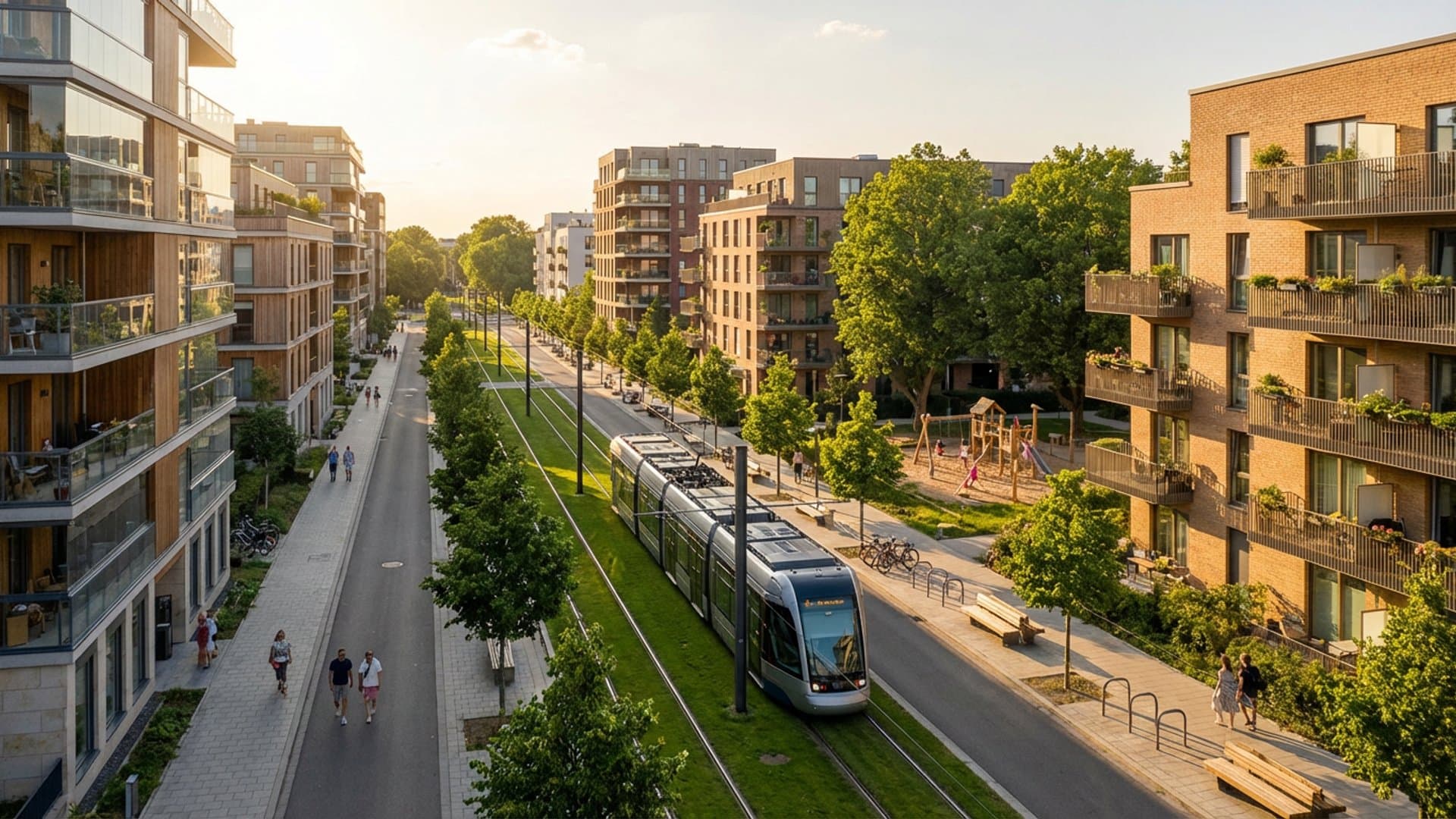
Teatinos is a different kind of neighborhood from Centro or Soho. It doesn't have the historic charm of the old city or the creative edge of the arts district. What it has is space, structure, and a daily environment that's designed for living rather than visiting.
The neighborhood grew alongside the University of Málaga campus, and that origin shows in the urban layout: wide avenues, planned green spaces, commercial services at street level, and residential blocks that prioritize function over aesthetics. It's not trying to be charming — it's trying to be livable.
For buyers coming from the U.S. or northern Europe, Teatinos may feel more recognizable than the historic center. The apartment buildings are newer, the infrastructure is more standardized, and the general pace of the neighborhood is calmer and more predictable. That lack of surprise is, for many buyers, the entire appeal.
What keeps it from feeling sterile is the community. Teatinos has a genuine residential population — families, university staff, local professionals — that gives it a neighborhood feel despite the modern architecture. There are local cafés, small restaurants, and the kind of day-to-day social fabric that develops when the same people walk the same streets every morning.
Who Teatinos Suits Best
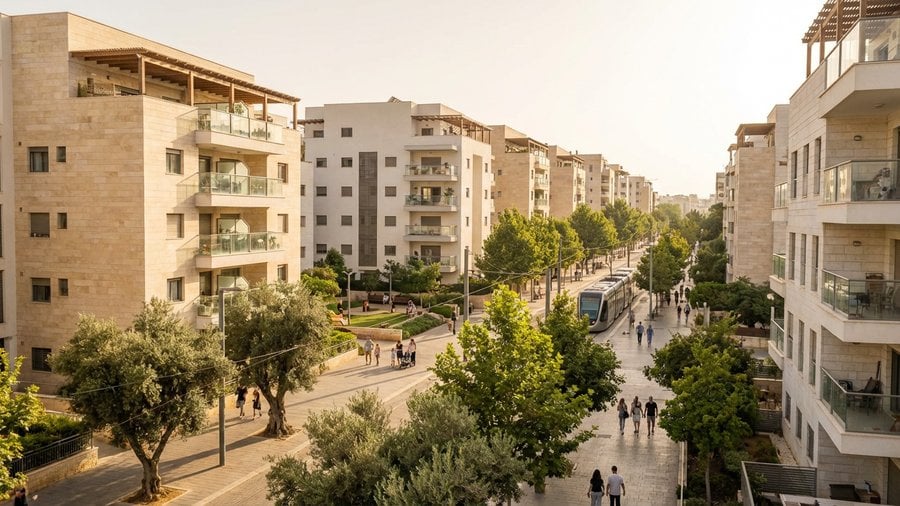
Teatinos attracts buyers whose priorities center on daily practicality.
Families. This is the neighborhood most families in Málaga gravitate toward, and for good reason. Larger apartments, elevators, secure parking, storage rooms, green spaces, and a calm environment make it significantly easier to manage daily life with children. The families guide covers what to look for in a family home and how Denise helps with the search.
Longer-term internationals. Buyers who are committing to Málaga for years rather than months often end up in Teatinos because it delivers consistency. The infrastructure works, the community is stable, and the neighborhood doesn't change character with the tourist season. If you're building a life here, not just testing one, Teatinos makes a strong case.
Remote professionals who prioritize space. If your home is your office and you need a dedicated room with a door, Teatinos is where you're most likely to find it without stretching your budget. The apartments here are larger than in Centro or Soho, and the neighborhood is quiet enough for focused work throughout the day.
Local buyers. A significant portion of Teatinos buyers are Málagueños — young professionals, families upgrading from smaller apartments, and retirees looking for accessible, well-serviced buildings. The neighborhood has strong local roots that balance its international appeal.
Buyers who prioritize walkable restaurants, nightlife, or historic character will likely prefer Centro or Soho. The neighborhood comparison lays out the tradeoffs clearly.
Remote-Work Fit: What to Know
Teatinos is one of the more straightforward neighborhoods for remote workers, mainly because the infrastructure is newer and more uniform.
Internet. Newer buildings in Teatinos generally have reliable fiber connections as standard. You're less likely to encounter the building-by-building variability that comes with older construction in Centro or Soho. That said, Denise still verifies connectivity for each property on your shortlist.
Noise. Teatinos is quiet. There's no nightlife strip, no tourist foot traffic, and the residential character means noise levels stay low day and night. If you need a calm environment for focused work or regular calls, this is the most consistently quiet option among the three neighborhoods.
Space. The biggest practical advantage for remote workers in Teatinos is square meters. Apartments here regularly include a third bedroom or a separate room that functions well as a dedicated home office. In Centro or Soho, that kind of space either costs significantly more or simply isn't available.
Light. Newer construction with larger windows and more considered orientations means Teatinos apartments tend to have good natural light. Buildings are also more spaced out than in the historic center, reducing the shadow issues common in narrow streets.
Routine. Working from home in Teatinos means your daily breaks look different from Centro or Soho. Instead of stepping out to a gallery or an artisan coffee shop, you're walking to a local café, a park, or the university campus area. The rhythm is calmer and more predictable, which suits some working styles better than others.
Day-to-Day Rhythm
Teatinos runs on routine, and for many residents that's its greatest strength.
Mornings are calm and functional. Parents walk kids to school, residents head to local bakeries and cafés, and the neighborhood moves with the unhurried pace of a community that isn't performing for anyone.
Midday brings activity to the commercial streets — supermarkets, local restaurants serving menú del día, and the kinds of everyday services (banks, pharmacies, hardware shops) that make you realize this is a neighborhood designed for people who live here, not people who are passing through.
Evenings are quiet. There are restaurants and a few bars, but the evening atmosphere is residential rather than social. Families are home, the streets empty gradually, and the neighborhood settles into its evening rhythm without fuss.
Weekend mornings are when Teatinos feels most like a community — families in the parks, markets, and local breakfast spots create a relaxed atmosphere that's distinctly different from the tourist-oriented energy of Centro.
Getting around is straightforward. The metro connects Teatinos to the city center and other parts of Málaga, and the road connections are good for drivers. It's not a walk-to-everything neighborhood the way Centro is, but daily essentials are within easy reach. Having a car is more common and more practical here than in the old city.
Property Types and Feel
Teatinos' housing stock is the most uniform of the three core neighborhoods. That uniformity is a feature, not a bug — it means fewer surprises and a more predictable buying experience.
Modern apartment blocks. The majority of properties in Teatinos are apartments in buildings constructed from the 1990s onward. They typically feature three or more bedrooms, open-plan living areas, fitted kitchens, built-in wardrobes, and balconies or terraces. Many include a trastero (storage room) and a parking space in the building's underground garage.
Newer developments. Recent construction in Teatinos has pushed toward higher energy efficiency, better insulation, community amenities (pools, landscaped common areas), and contemporary design. These properties tend to be at the upper end of the Teatinos price range but offer the most comprehensive package for families and long-term buyers.
Older Teatinos stock. Some of the earlier buildings in the neighborhood — from the late 1990s and early 2000s — are well-built but may have less updated common areas or slightly less efficient layouts. They can represent good value, especially if the apartment itself has been renovated by the current owner.
Compared to Centro and Soho, what you won't find in Teatinos is architectural surprise. There are no converted lofts, no buildings with centuries of history, no hidden courtyards. What you get is reliability: a well-built apartment in a well-managed building with the practical features that make daily life easier.
Micro-Areas to Explore
Teatinos is more uniform than Centro or Soho, but there are still meaningful differences between sections. These are starting points — Denise can help you identify which blocks and streets match your priorities.
Near the university campus. The area closest to the University of Málaga campus has a slightly more youthful energy and tends to have a wider range of services — cafés, copy shops, affordable lunch spots. Apartments here can range from student-oriented to family-sized, so check the building profile carefully.
Teatinos central. The core residential area, away from the campus, is where you'll find the most settled community feel. Established families, well-maintained buildings, and proximity to schools and parks. This is typically where families with children look first.
Newer developments on the periphery. The edges of Teatinos, where more recent construction has taken place, offer the newest buildings with the most modern amenities. Community pools, energy-efficient design, and larger floor plans are more common here. The tradeoff is that some of these areas are still developing their own neighborhood feel.
Toward the hospital district. The section of Teatinos closer to the regional hospital offers good transport links and a practical location for medical professionals. The building stock is varied, with a mix of older and newer construction.
As with any neighborhood, the right micro-area depends on your specific needs. Denise walks Teatinos regularly and can advise which streets offer the best fit for families, remote workers, or long-term residents.
How to View Homes in Teatinos Efficiently
Drive and walk. Teatinos benefits from both perspectives. Drive through first to understand the scale and layout, then walk the blocks around any property you're considering. The neighborhood is larger than Centro or Soho, so getting a sense of distances matters.
Check common areas. In modern apartment blocks, the quality of common areas — lobbies, elevators, parking garages, gardens — tells you a lot about building management. Well-maintained common spaces usually signal an active community of owners.
Test the daily route. If you have children, walk the route to the nearest school during school hours. If you commute, test the metro or driving route at a realistic time. These practical details shape how the neighborhood actually feels to live in.
Compare floor plans. Teatinos apartments can look similar on paper. During viewings, pay attention to the differences — how the kitchen connects to the living area, where natural light falls, how the bedrooms are arranged relative to each other. Small layout differences make a big difference in daily comfort.
Ask about community fees and rules. Building-level costs and regulations vary. Some buildings have pools, security, and concierge services that come with higher community fees. Others are more basic. Denise can outline these details for every property she recommends.
Featured Listings and Collections
The most relevant curated collection for Teatinos is the new-build family-friendly homes — properties selected for space, modern layouts, building amenities, and suitability for family life.
You can also browse all available listings to see everything on the market across Teatinos and the rest of Málaga.
If you own a property in Teatinos and are considering selling, Denise works with sellers in this neighborhood too. Learn more about selling in Teatinos.
Next step
Tell her what your family needs. She'll build a Teatinos shortlist around it.
Available properties in Teatinos
If this neighborhood is on your shortlist, this is the public sample of active homes Denise believes are worth visiting.
Related comparison guides
How buying here works
Mortgage for Foreigners
Can foreigners get a mortgage in Spain? Yes. Loan-to-value ratios, interest rates, required documents, and which banks to approach. Practical buyer guide.
What Happens After Purchase
You bought property in Málaga — now what? Setting up utilities, empadronamiento, insurance, community registration, residency steps, and ongoing obligations.
Property types that fit here
Daily-life guides for this neighborhood
International Schools
Every international school option in Málaga: British, American, German, and IB curriculum. Fees, locations, languages, and which neighborhoods to live in.
Getting Around
Do you need a car in Málaga? Buses, metro, tram, cycling, walking, and driving — honest transport guide for each neighborhood. Everything relocators need to know.
Published by Denise Guerrero
FAQ
Is Teatinos a good neighborhood for families?
For most families, it's the strongest option in Málaga. Larger apartments, newer buildings, elevators, parking, storage, green spaces, and a calm daily environment make it significantly more practical for life with children than Centro or Soho. The families guide goes into detail on what to look for and how Denise helps.
How does Teatinos compare to Centro and Soho?
Teatinos is modern, spacious, and practical. Centro is historic, walkable, and energetic. Soho is creative, calmer, and architecturally varied. The tradeoff for Teatinos is that it lacks the character and walkable restaurant culture of the other two — but it delivers on space, quiet, and infrastructure. The neighborhood comparison lays it all out.
Is Teatinos good for remote workers?
Yes — particularly if space is a priority. Apartments here regularly include a room that works well as a dedicated home office, and the neighborhood is quiet enough for focused work throughout the day. Internet infrastructure is generally reliable in newer buildings.
What kind of properties are available in Teatinos?
Mostly modern apartments in buildings from the 1990s onward. Three-bedroom layouts are common, and many include parking, storage, and balconies. Newer developments add community amenities like pools and landscaped areas. The family-friendly collection showcases some of the best options for families.
Is Teatinos walkable?
For daily essentials, yes — supermarkets, pharmacies, cafés, and local restaurants are all within reach. But it's not walkable in the way Centro or Soho are, where everything is packed into a compact historic core. Teatinos is more spread out, and having a car is more common and practical here. The metro also connects the neighborhood to the city center.
What should I check during a viewing in Teatinos?
Common-area quality (lobby, elevator, garage), community fees and rules, natural light and orientation, layout flow between rooms, and storage. In newer buildings, also check insulation and energy efficiency. Denise covers most of these in her property evaluations, but seeing them firsthand confirms what the listing can't show.
Are there good schools near Teatinos?
The area has a range of school options — public, concertado, and private — within the neighborhood and in adjacent areas. Denise doesn't advise on specific schools, but she can help you focus your property search around the zones that keep your school options open.
How are transport connections from Teatinos?
Good. The metro connects Teatinos to the city center, and the road network provides easy access to the highway, the airport, and the coast. For daily commuting or weekend trips, the infrastructure is practical and well-maintained.
Is Teatinos a good investment?
Teatinos has strong and consistent demand, particularly from local families and longer-term residents, which generally supports property values. But "good investment" depends on your specific goals. Discuss your objectives with Denise and consult a qualified financial professional for investment-specific advice.
What are community fees like in Teatinos?
They vary by building. Newer developments with pools, gardens, and concierge services tend to have higher fees. Older buildings with fewer amenities are lower. Fees typically cover building insurance, common-area maintenance, elevator service, and any shared amenities. Denise provides this information for every property on your shortlist.
How do I start looking at properties in Teatinos?
Start with a conversation with Denise. Share your priorities — family needs, budget, space requirements — and she'll build a Teatinos-focused shortlist. You can also browse the listings on your own to get a feel for what's available.
Can I live in Teatinos without a car?
Yes, but it's less convenient than in Centro or Soho. Daily essentials are walkable, and the metro reaches the city center, but a car makes errands, school runs, and weekend outings easier. Most Teatinos residents have one.
Not sure Teatinos, Málaga — A Neighborhood Guide for Buyers is the right fit?
See which neighborhoods match your lifestyle, budget, and priorities — it takes 2 minutes.
Sell in Teatinos to international buyers
Request a confidential valuation with a launch strategy focused on expat and remote professional demand.