
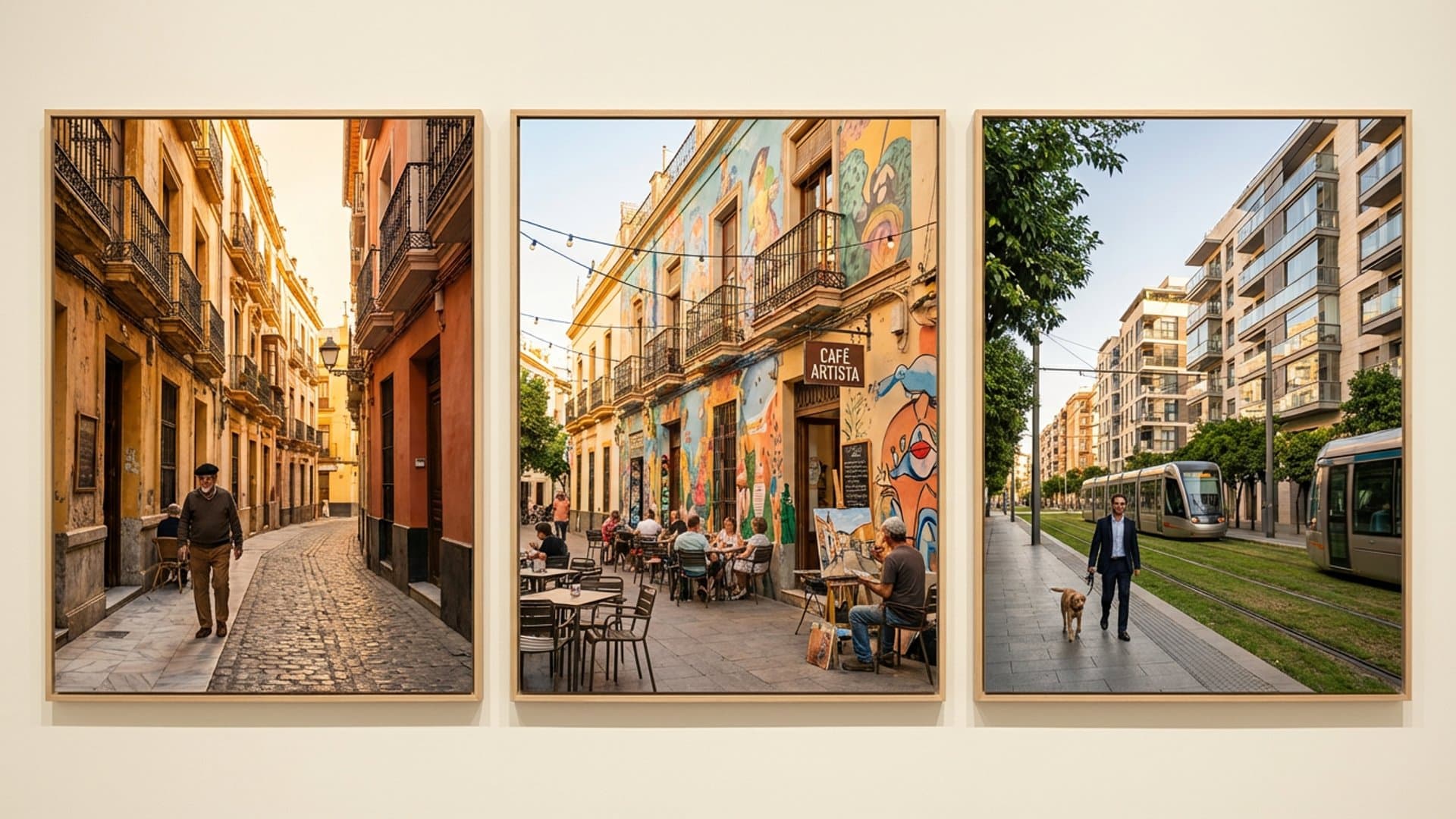
Quick Answer: If You Want X, Choose Y
If you want to walk out the door and be in the middle of a living city — restaurants, culture, noise, history — choose Centro Histórico.
If you want a neighborhood with creative character, a calmer pace than Centro, and good light for working from home — choose Soho.
If you want space, quiet, a family-friendly environment, and modern infrastructure that just works — choose Teatinos.
If you're not sure yet, keep reading. The right choice depends on how you plan to spend a typical day, not on which neighborhood sounds most appealing in a listing description.
By Buyer Profile: Who Fits Where
Remote Workers and Digital Nomads
Centro works if you want maximum street life and don't mind doing more homework to find a quiet apartment with good light and a closeable office. The neighborhood is stimulating but variable — you need the right building and the right street. The turnkey apartments for remote professionals collection filters for exactly this.
Soho is the most natural fit. Calmer than Centro, better light conditions, and a property stock more likely to include a dedicated workspace. Coworking options are nearby. The design-led lofts collection features properties with the kind of layout and character that appeals to creative professionals.
Teatinos wins on space and quiet. If your priority is a large, dedicated home office in a consistently calm environment, Teatinos delivers that more reliably and at a lower cost than the other two.
Couples
Centro is ideal for couples who want energy, spontaneity, and a daily life built around going out, eating well, and being immersed in the city. The apartments are smaller, but for two people, that often works fine.
Soho suits couples who want the same cultural proximity but with more breathing room — slightly larger apartments, a calmer evening pace, and easier access to the waterfront.
Teatinos works for couples who prioritize space and quiet over nightlife and walkable restaurants. If your relationship thrives on home life, cooking together, and weekend routines rather than going out most evenings, Teatinos fits.
Families
Teatinos is where most families end up, and for practical reasons: larger apartments, elevators, parking, storage, green spaces, and schools nearby. The family-friendly collection is a good starting point.
Soho can work for families with older children who value walkability and don't need as much space. It's a selective fit — not the default.
Centro is the least typical family choice. Some families with older children live here and love it. But the practical limitations (smaller apartments, no guaranteed elevator, limited green space) mean it's not the obvious pick for most.
Local and Returning Spanish Buyers
Centro attracts Málagueños who want to live in the heart of their own city — it's the most culturally rooted of the three.
Teatinos has a strong local buyer base, particularly among families upgrading to larger apartments and retirees looking for accessible, well-serviced buildings.
Soho draws a mix of local and international buyers drawn to the neighborhood's evolving character and central-but-calm positioning.
Day-to-Day Rhythm: What Each Neighborhood Feels Like
Centro Histórico runs on contrast. Quiet mornings give way to busy afternoons and lively evenings. The energy is high, the pace is walkable, and the variety of daily encounters is wide. You'll bump into tourists, neighbors, and regulars at the same café — all in the same morning. The tradeoff is noise: parts of Centro are loud, especially on weekends. If you want a daily life with texture and surprise, Centro delivers. If you want predictability, it doesn't.
Soho has a more even rhythm. Mornings are calm, midday is pleasantly active, and evenings are relaxed without being dead. The creative atmosphere is real but not performative — you notice it in the shopfronts and the people, not in tourist programming. The waterfront is a short walk south, adding a dimension Centro doesn't have. Soho suits people who want a neighborhood that feels alive without feeling overwhelming.
Teatinos runs on routine. Mornings are functional, midday is local, and evenings are quiet. The neighborhood is designed for living, not for visiting. Weekend mornings — parks, breakfast spots, families — are when Teatinos feels most like a community. If daily excitement isn't a priority and you value calm consistency, Teatinos delivers that more reliably than anywhere else in Málaga.
Property Types: What You'll Find in Each
Centro Histórico: Apartments in older buildings, often centuries-old. High ceilings, thick walls, character — but also variability in condition, renovation quality, and infrastructure. Elevators aren't guaranteed. Outdoor space is a premium. What you get is atmosphere that newer buildings can't replicate.
Soho: The most varied stock. Older mid-century buildings, thoughtfully renovated apartments, newer construction, and loft-style conversions. This variety means more opportunity — but also more need for careful evaluation. Quality ranges widely. The strongest properties combine original character with modern finishes.
Teatinos: Modern apartment blocks from the 1990s onward. Three-bedroom layouts, fitted kitchens, parking, storage, balconies. Newer developments add community pools, better insulation, and contemporary design. What you get is consistency and reliability — no architectural drama, but fewer surprises.
How to Build a Shortlist and View Efficiently
Choosing a neighborhood isn't about picking one from a description. It's about seeing three to five properties in each area and letting the comparison do the work. Here's how to approach it.
Step 1: Start with a conversation. Tell Denise your priorities — lifestyle, budget, work needs, family situation. She uses that to build a focused shortlist, typically five to eight properties across one or two neighborhoods.
Step 2: Browse the collections. Before your trip, look through the curated collections that match your profile: turnkey apartments for remote professionals in Centro, design-led lofts in Soho, or family-friendly homes in Teatinos. You can also browse all listings to cross-reference.
Step 3: Plan three to five viewing days. Denise organizes viewings by neighborhood so you're not zigzagging across the city. Seeing properties in the same area back to back sharpens your sense of what you're actually drawn to.
Step 4: Walk between viewings. Use the time between appointments to experience each neighborhood as a resident, not a visitor. Have coffee, walk the side streets, sit in a plaza. The apartment matters, but the street matters too.
Step 5: Compare honestly. After viewings, rank what you've seen. Which neighborhood made you feel most at home? Not most impressed — most at home. That distinction matters.
If you're still exploring broadly, the moving to Málaga hub has guides for different buyer profiles that can help you narrow down before your trip.
Your Next Step
You don't need to decide between neighborhoods before calling Denise. In fact, one of the most useful things she does is help you figure out which neighborhood fits — based on your priorities, not assumptions. A short conversation is enough to get started.
Published by Denise Guerrero
FAQ
Which neighborhood is best for remote work?
Soho is the most natural fit — calm, good light, and a property stock likely to include a closeable office. Teatinos wins on space and quiet. Centro works but requires more careful property selection to get the right noise, light, and layout conditions.
Which neighborhood is best for families?
Teatinos for most families. Larger apartments, elevators, parking, green spaces, and schools. The family-friendly collection is a good starting point. Soho and Centro can work for families with older children, but they're selective fits.
Which neighborhood is the most walkable?
Centro Histórico and Soho are both highly walkable for daily needs. Centro is denser; Soho adds waterfront proximity. Teatinos is walkable for essentials but more spread out — many residents find a car helpful.
How do I choose quickly if I only have a few days?
Start with a call with Denise before your trip. She'll build a shortlist based on your priorities so your viewing days are focused, not exploratory. Three to five days is usually enough to see a focused selection across one or two neighborhoods and make a confident decision.
Can I view properties in all three neighborhoods on one trip?
Yes, if the trip is long enough. Denise organizes viewings by neighborhood to keep each day focused. Two or three viewings per area, spread across four to five days, gives you a solid comparison without rushing.
Which neighborhood has the best value for money?
Teatinos offers the most space per euro. Centro and Soho cost more per square meter but deliver different lifestyle value — walkability, culture, character. "Best value" depends on what you're optimizing for.
What if I like two neighborhoods equally?
That happens. Denise helps by scheduling viewings in both areas and giving you honest context for each property. Sometimes the apartment itself breaks the tie — one place feels right in a way that settles the neighborhood question too.
Is it worth seeing all three even if I think I know what I want?
Usually, yes. Seeing at least one or two properties in a neighborhood you're less sure about often clarifies why you prefer your first choice — or changes your mind entirely. The comparison is more useful than the assumption.
How different are the price ranges across the three?
Centro tends to be highest per square meter for renovated properties. Soho overlaps with Centro but has more variety due to the mix of old and new. Teatinos is generally the most affordable for comparable apartment sizes. Denise provides specific pricing context for each property.
Which neighborhood is quietest?
Teatinos, consistently. Soho is quieter than Centro but still has street life. Centro varies street by street — some pockets are surprisingly calm, others are loud. If quiet is non-negotiable, Teatinos is the safest choice.
Where should I start if I've never been to Málaga?
Start with a conversation with Denise and then browse the listings to get a feel for what's available at your budget. The moving to Málaga hub also has guides organized by buyer type — Americans, EU/UK expats, families, digital nomads — that can help you orient before your first visit.
Can Denise help me decide which neighborhood to focus on?
Yes — that's one of the most common things she helps with. The first conversation is about your priorities, not about properties. She'll ask how you want to live, then recommend where to look. Many buyers come in thinking they want one neighborhood and discover another fits better.