
•
•--
🚶Walkability (central neighborhoods)
🚌Bus network
🚇Metro
🚊Tram
🚗Car needed?
The Short Answer
In most central Málaga neighborhoods, you don't need a car for daily life. I didn't have one for my first six months and never felt stuck. Walking, the occasional bus, and ride-sharing covered everything. The city is compact enough that "the other side of town" is a twenty-minute walk, not a forty-minute drive.
The longer answer: it depends on where you live and how you live. Here's the honest breakdown.
Walking
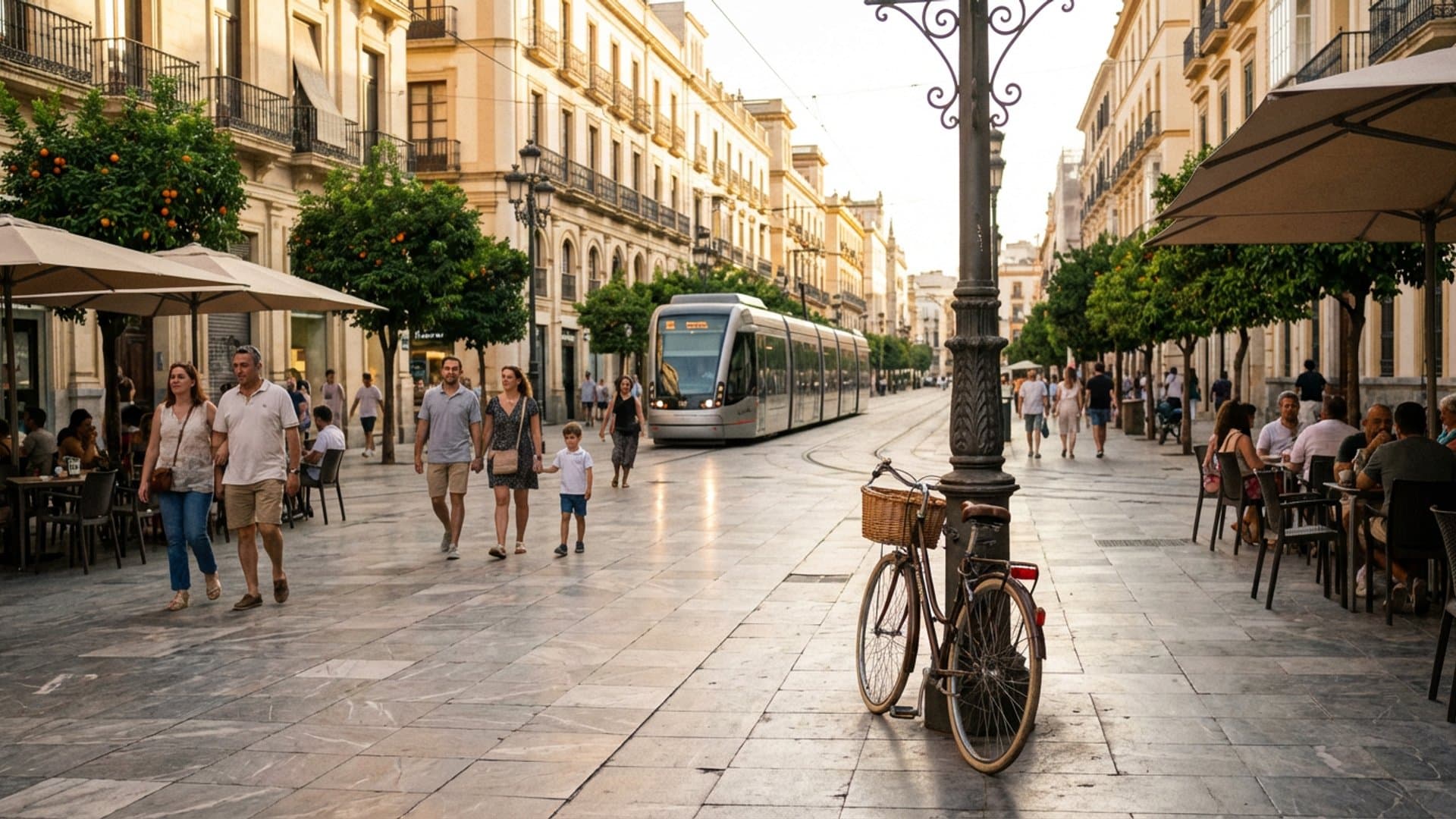
Málaga's central neighborhoods are built for walking. Flat terrain (except the Alcazaba hill and the El Limonar incline), wide sidewalks, pedestrianized streets, and a compact layout mean that Centro, Soho, La Malagueta, and Huelin are all fully walkable for daily errands, dining, and socializing.
The seafront promenade (Paseo Marítimo) runs from the port area east through La Malagueta, Pedregalejo, and El Palo — a flat, continuous walking and cycling path that connects the eastern beach neighborhoods to the city center. Walking from Pedregalejo to Centro along the promenade takes about twenty minutes and is one of the best commutes you'll find anywhere.
Public Transport
Buses (EMT Málaga):
The bus network covers the entire city and suburbs. Useful for routes that walking doesn't cover: Centro to Pedregalejo (Line 11, 8 minutes), Centro to El Palo (Line 11, 15 minutes), Teatinos to Centro (various lines, 15 minutes). Buses run frequently from approximately 6:30 AM to 11:00 PM, with night buses (búho) on weekends.
Fare: €1.30 per ride with a rechargeable card. Monthly pass: approximately €40 for unlimited rides.
Metro (Metro de Málaga):
Two lines serving the western and northern parts of the city, including Teatinos, the university area, and connecting to suburban areas. Line 1 is particularly useful for residents of Teatinos and La Paz. The metro doesn't reach the eastern neighborhoods (Pedregalejo, El Palo) or the seafront.
Fare: €0.82–1.50 depending on zones. Monthly pass: approximately €35–40.
Tram (Metro Ligero):
A single tram line runs from western Málaga through Huelin to the center. It's the main transport advantage for Huelin residents — connecting to Centro in about 10 minutes with reliable, frequent service.
Cercanías (commuter rail):
Connects Málaga to the airport, Torremolinos, Benalmádena, and Fuengirola along the coast. Useful for airport trips (20 minutes, €1.80) and day trips to the western Costa del Sol. The main station is Málaga Centro-Alameda.
Cycling
Málaga is increasingly bike-friendly, with a growing network of bike lanes, particularly along the seafront and in the flatter central and western neighborhoods. The seafront bike path from the port to El Palo is excellent — flat, separated from traffic, and scenic.
The city has a public bike-sharing system that's affordable for occasional use. Electric bikes and scooters are also available for rent.
Practical considerations: summer heat makes cycling uncomfortable between 1:00 PM and 6:00 PM in July-August. Bike theft exists — invest in a good lock. Hillier neighborhoods (El Limonar, parts of Centro near the Alcazaba) are challenging without an electric bike.
Driving and Parking
If you need a car (for El Limonar, school runs, or Costa del Sol day trips), here's what to know:
Parking is the biggest practical challenge. Street parking in central neighborhoods is scarce and competitive. Resident parking zones (zona azul and zona verde) exist — you'll need an empadronamiento certificate to apply for a resident permit. Public garages charge €100–200/month. Buying or renting a private garage space is common: €30,000–50,000 to purchase, €80–150/month to rent.
Driving in the city is manageable but not pleasant during rush hours (8:00–9:30 AM, 1:30–3:00 PM, 7:00–8:30 PM). The one-way street system in Centro can be confusing. The seafront road is the main east-west artery and gets congested.
Car rental and sharing: For occasional car needs (IKEA trips, Costa del Sol day trips), short-term rental or car-sharing services (Cooltra, SHARE NOW) are cost-effective alternatives to ownership.
Do You Need a Car? By Neighborhood
| Neighborhood | Need a Car? | Why |
|---|---|---|
| Centro Histórico | No | Everything walkable, parking nightmare |
| Soho | No | Flat, central, walkable to everything |
| La Malagueta | No | Walkable to Centro and beach |
| Pedregalejo | Nice to have | Bus covers it, but car useful for schools/errands |
| El Palo | Useful | Further from center, bus is the main connection |
| Huelin | No | Tram connection, walkable to beach |
| Teatinos | Helpful | Metro/bus cover daily needs, car useful for weekend trips |
| La Paz | No | Metro connection, walkable to Centro |
| El Limonar | Yes, essential | Hillside, no shops/transport within walking distance |
| Torremolinos | Helpful | Cercanías covers the commute, car for local errands |
Next Step
If you are still deciding whether you want a walkable setup or a car-based one, Denise can help you match that to the right part of the city.
If you want examples in neighborhoods that fit the transport rhythm you prefer, Denise can share selected properties from trusted partner agencies.
Published by Denise Guerrero
FAQ
Do I need a car to live in Málaga?
In most central neighborhoods (Centro, Soho, La Malagueta, Pedregalejo, Huelin, La Paz): no. Daily life is walkable, and public transport covers the rest. The exception is El Limonar, where a car is essential. For families with school-age children in international schools, a car is practically necessary regardless of neighborhood. For everyone else, it's a convenience, not a necessity.
How much does public transport cost?
A single bus ride costs €1.30 with a rechargeable card. Monthly bus passes are approximately €40. Metro rides cost €0.82–1.50 depending on zones, with monthly passes around €35–40. Cercanías (commuter rail) to the airport costs €1.80. The system is affordable and functional for daily commuting.
Is Málaga safe to walk at night?
Generally yes. The central neighborhoods are well-lit and populated late into the evening (Spain's culture of late dining and evening paseo keeps streets lively). Standard urban awareness applies — avoid unlit alleys, keep an eye on your belongings, and be normally alert. The city doesn't have a significant street crime problem compared to larger cities.
How do I get from the airport to the city center?
Three options: Cercanías commuter train (20 minutes, €1.80 — the best value), airport bus (Line A Express, 15-20 minutes, €3), or taxi/Cabify (15-20 minutes, €15-20). For property viewing trips, I'd recommend arranging transport in advance — contact me and I can help coordinate logistics.
Is it easy to cycle in Málaga?
In flat areas (seafront, Soho, Huelin, La Malagueta): yes. The seafront bike path is excellent. In hilly areas (El Limonar, upper Centro): challenging without an electric bike. Summer heat limits comfortable cycling to mornings and evenings. Bike sharing and electric scooter rental are widely available.
How does parking work in Málaga?
Street parking in central areas uses a color-coded zone system: blue zones are time-limited paid parking (for visitors), green zones are for registered residents (with an annual permit). Getting a resident parking permit requires your empadronamiento certificate. Many buildings have underground garages — a parking space adds significant value when buying property.
Can I use Uber in Málaga?
Uber operates in Málaga but with limited availability. Cabify is the more widely used ride-hailing app and works reliably. Traditional taxis are abundant, especially at designated ranks. For airport transfers, pre-booking a taxi or Cabify is recommended.
How do I get to the Costa del Sol from Málaga?
By car: Torremolinos (15 min), Fuengirola (30 min), Marbella (45 min), Estepona (60 min). By cercanías train: Torremolinos (12 min), Fuengirola (45 min). By bus: direct services to Marbella and other coastal towns from the Málaga bus station. See the Málaga vs Marbella comparison for more context.
Is there a metro to the airport?
Not directly, but the cercanías commuter rail connects the airport to Málaga Centro-Alameda station (20 minutes, €1.80). A metro extension to the airport has been discussed but is not yet operational. The cercanías is reliable, frequent, and the most cost-effective airport connection.
What's the best transport app for Málaga?
Google Maps handles bus and metro routing well. The EMT Málaga app provides real-time bus tracking. Cabify is the main ride-hailing app. Moovit is another popular option for public transport planning. For bicycle and scooter sharing, check the local providers' apps.
Can I live car-free with children?
In walkable neighborhoods with good school access (Teatinos, Pedregalejo, La Paz — for Spanish schools): yes, many families do. If your children attend international schools (requiring a 10-15 minute drive to El Limonar): a car is practically necessary for the school run. See the family neighborhoods comparison.
How walkable is Málaga compared to other Spanish cities?
Málaga is one of Spain's most walkable cities for its size. The compact center, flat terrain (mostly), pedestrianized streets, and mild climate make walking the natural default. It's more walkable than Alicante or most Costa del Sol towns, comparable to the best parts of Valencia, and close to Barcelona's central walkability. The main limitation: the eastern and western suburbs require transport. Contact me if walkability is a priority and you want help choosing the right neighborhood.