
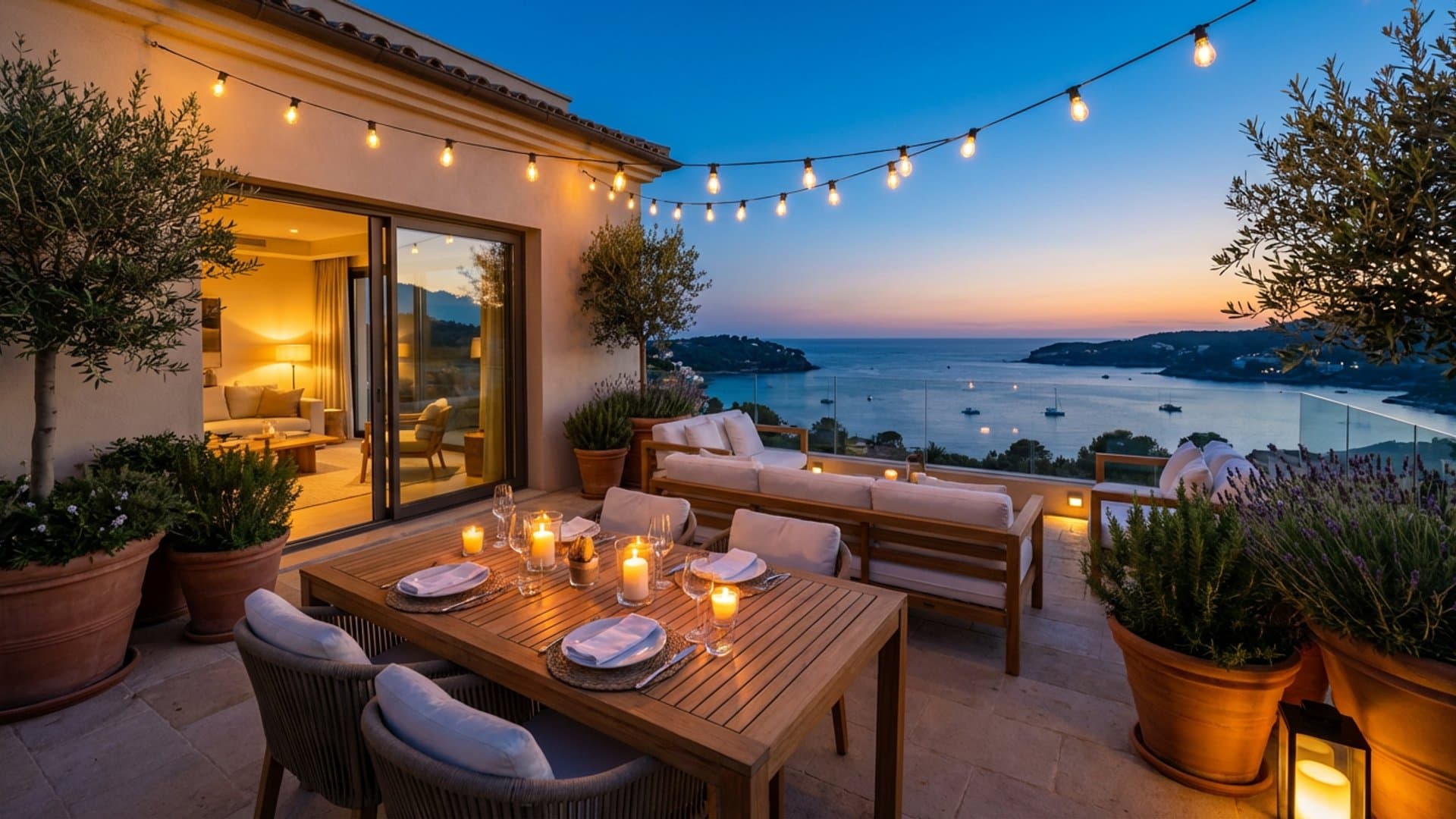
Second-Home Priorities: Turnkey, Lock-and-Leave, Privacy
When a property is your second home, you need it to be low-friction. That means something different than it does for a full-time buyer.
Turnkey readiness. You want to arrive, open the door, and start using the space. No waiting on renovations, no managing contractors from another country, no "it'll be ready next month." A turnkey property — one that's move-in ready, well-maintained, and finished to a standard you're comfortable with — removes the biggest source of stress for second-home owners.
Lock-and-leave confidence. When you fly home, you need to know the property is secure. That means a well-managed building, reliable locks, good neighbors or a portero, and no maintenance surprises waiting for you when you return. The building matters as much as the apartment.
Privacy and independence. Second-home buyers often want a space that feels like theirs — not like a rental, not like a hotel. The layout, the furnishings, the neighborhood: everything should support the feeling that this is your place, even if you're only there a few months a year.
Denise understands these priorities because she works with second-home buyers regularly. She filters for properties that meet this standard from the start, so you're not sorting through listings designed for full-time residents. The turnkey apartments in Centro collection is one example of properties already vetted for this kind of use.
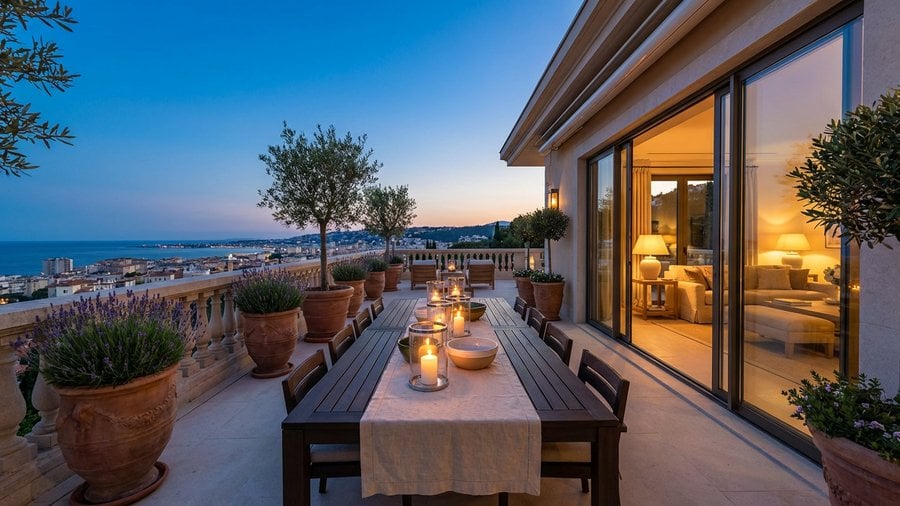
What You May Be Weighing Up
Second-home buyers tend to face a particular kind of decision fatigue — not because the questions are hard individually, but because they pile up and you're often making decisions from a distance.
How much time will I actually spend here? The honest answer shapes everything. If you're planning six months a year, the property needs to feel like a real home. If it's six weeks, comfort and convenience matter more than customization. Think about your realistic rhythm, not your aspirational one.
Buy now or wait? Some buyers want to secure a property while they know what's available. Others prefer to visit a few times before committing. Both approaches work — the key is not letting indecision stretch into missed opportunities.
Furnished or unfurnished? Furnished gets you in faster. Unfurnished lets you make the space yours. Some properties come partially furnished, which can be a practical middle ground. Your answer depends on how personal you want the space to feel versus how quickly you want to start using it.
Rental potential. Some second-home buyers want the option to rent the property when they're not using it. That's a reasonable goal, but it affects which neighborhoods, building types, and license requirements apply. Rental regulations in Málaga vary by area and type, so always verify with a qualified legal professional before factoring income into your purchase decision.
Managing from a distance. Who handles a leak, a broken appliance, or a community meeting when you're not there? Some buildings have professional management. Others rely on the community of owners. Denise checks these details for every property she recommends — it's the kind of thing that doesn't show up in a listing but determines how stressful ownership feels from abroad.
How Denise Helps Second-Home Buyers
Denise Guerrero works with second-home buyers by focusing on the things that matter most when you won't be there every day.
Understanding your pattern. In your first conversation, Denise asks how you plan to use the property — how often, for how long, alone or with family, and whether rental use is part of the picture. Your answers shape every recommendation that follows.
A curated shortlist. Denise selects properties that meet second-home criteria: turnkey condition, secure buildings, manageable communities, and neighborhoods that suit part-time living. Each property comes with context — not just the listing details, but what the building management is like, how the property has been maintained, and whether it's genuinely ready to use or would need work first.
You can also browse the full listings on your own anytime. But the curated shortlist is where most second-home buyers find the best matches, because the filtering has already been done.
Efficient viewings. Second-home buyers often visit Málaga for short windows. Denise plans viewings to make the most of your time — focused, well-paced, and organized around the neighborhoods that fit. If you only have two or three days, she'll make them count.
Process support. The buying process in Spain involves steps that may be new to you — reservation agreements, NIE numbers, notary appointments, and specific taxes. Denise explains the key stages at a high level and connects you with legal and financial professionals who handle the details. The buying guide is a good companion if you want to read ahead.
Neighborhood Fit: Where Second-Home Buyers Land
The right neighborhood for a second home depends on what kind of time you want to spend there.
Centro Histórico is the walkable old city — culture, restaurants, and daily life right outside your door. For second-home buyers who want to arrive and immediately feel immersed in Málaga, it's hard to beat. Apartments tend to be in older buildings, which means checking the specifics on each one: elevator access, building condition, management quality. But the lifestyle payoff is significant — everything is close, and the neighborhood has energy that makes even short visits feel rich.
Soho, just south of Centro, offers a more relaxed pace with a creative atmosphere. It appeals to second-home buyers who want walkability and personality without the tourist density of the old city. Some newer buildings here offer better lock-and-leave infrastructure than the historic center.
Teatinos is the modern residential option — larger apartments, newer builds, secure parking, and community management that tends to be more structured. If your priority is ease of ownership and you want a property that practically runs itself when you're away, Teatinos delivers consistency. It's also worth considering if you plan to spend longer stretches and want a more settled, neighborhood feel.
La Malagueta is often the most natural upgrade for second-home buyers who want beachfront prestige and walkable access to the center. Pedregalejo suits buyers who want a more relaxed coastal base with stronger neighborhood identity and a less urban rhythm than the core.
Some second-home buyers also ask about coastal areas outside Málaga's urban core. Denise can advise on whether a location further along the coast might suit your specific needs — though within Málaga itself, La Malagueta and Pedregalejo are often the first additions to the shortlist beyond Centro, Soho, and Teatinos.
Practical Checklist for Second-Home Buyers
A few things to pay attention to that matter more for second homes than primary residences.
Building management. Who handles maintenance, common-area upkeep, and emergencies? A professionally managed building gives you more confidence when you're not there. Ask about the community of owners (comunidad de propietarios) and whether there's an administrator.
Security. Check the building entrance, apartment locks, and whether there's a portero or controlled access. If the building has a garage, check security there too. Denise evaluates this for every property on your shortlist.
Condition and readiness. A property that needs "just a little work" can become a six-month headache when you're managing it from another country. Be honest about your appetite for renovation versus your preference for walking in and using the space immediately.
Utilities and standing charges. Even when you're not there, a property has costs — community fees, utilities on standby, insurance, local taxes. Get a clear picture of these before you commit. Denise's recommended legal team can outline the full cost of ownership.
Access logistics. How far is the property from the airport? From the train station? If you're flying in regularly, proximity to transport makes a practical difference to how your visits feel.
Your Next Step
A conversation with Denise is the best starting point. Tell her how you plan to use the property, how often you'll be in Málaga, and what matters most — she'll build a search around the way you actually want to live.
Published by Denise Guerrero
FAQ
What does "turnkey" actually mean in Málaga's property market?
A turnkey property is one that's ready to use immediately — no renovation, no major updates, no waiting. It means the kitchen works, the bathrooms are finished, the systems are functional, and the space is in a condition where you can move in and start living. The turnkey collection in Centro is a curated example of properties that meet this standard.
How do I handle maintenance when I'm not in Málaga?
It depends on the building. Professionally managed communities handle common-area maintenance and can coordinate with tradespeople for apartment-level issues. Some owners hire a local property manager or ask a trusted contact to check in periodically. Denise can advise on what's realistic for each building she recommends.
How do I plan viewings when I'm only visiting for a few days?
Let Denise know your dates as early as possible. She'll build a focused schedule — typically two to four viewings per day, organized by neighborhood so you're not zigzagging across the city. Even two or three days can be productive if the shortlist is well-prepared. Browse the listings beforehand to flag properties you want to see.
Should I buy furnished or unfurnished?
Furnished is faster — you arrive and everything is ready. Unfurnished lets you choose your own style and quality. Some properties are partially furnished, which can work well for a second home. Think about how personal you want the space to feel versus how quickly you want it usable. Denise can filter by furnishing status when building your shortlist.
What should I know about resale if I decide to sell later?
Location, condition, and building quality are the biggest factors in resale value. Properties in well-managed buildings, popular neighborhoods, and turnkey condition tend to hold their value better. Denise can give you a general sense of how a property compares to recent sales in the area — though for precise valuations, always consult with a qualified professional.
Can I rent out my second home when I'm not using it?
Potentially, yes — but rental regulations in Málaga vary by area, building, and license type. Some buildings don't permit short-term rentals at all. Always verify with a qualified legal professional before factoring rental income into your purchase decision. If rental use is part of your plan, tell Denise upfront so she can filter for properties where it's viable.
How does the buying process work for second-home buyers?
The process is the same as for any buyer in Spain — NIE number, reservation agreement, notary appointment, taxes. The main difference is logistical: you may be coordinating steps from another country. Denise manages the timeline and connects you with professionals who are used to working with international buyers. The buying guide covers the key stages.
Which neighborhood is best for a lock-and-leave second home?
Teatinos tends to offer the most reliable lock-and-leave infrastructure — newer buildings, structured management, secure parking. But Centro and Soho can work well too if the specific building is right, and La Malagueta is often the best match for buyers who want that same ease with a more premium seafront setting. Denise evaluates each property for second-home suitability, not just desirability.
What ongoing costs should I expect as a second-home owner?
Community fees (comunidad), local property tax (IBI), utilities on standby, building insurance contributions, and potentially non-resident income tax if you're not a Spanish tax resident. The amounts vary by property. Denise's recommended legal and tax professionals can give you a full breakdown before you commit.
How far in advance should I start the search?
There's no fixed rule. Some buyers find the right property on their first trip; others take several visits over months. Starting the conversation early gives Denise time to understand your priorities and track what comes on the market. You can reach out at any stage — even if you're a year away from buying.
What if I'm not sure whether I want a second home or a full relocation?
That's a fine place to start. Talk to Denise — she works with buyers at both ends of the spectrum and can help you think through which approach fits your life right now. The search process is similar in either case; the difference is in what you prioritize. Browse the listings to start getting a feel for what's available.
See which neighborhoods match your situation
The quiz takes your second-home priorities — turnkey, lock-and-leave, and accessibility into account and recommends 2-3 neighborhoods.
Recommended next reads
Málaga City vs Costa del Sol
Should you buy in Málaga city or the Costa del Sol? Honest comparison of lifestyle, prices, community, and investment potential. Expert buyer guide.
Centro vs La Malagueta vs Soho
Choosing between Centro Histórico, La Malagueta, and Soho? Compare lifestyle, prices, walkability, and vibe to find your perfect Málaga neighborhood.
Property types to explore
Daily life in Málaga
Weather by Month
What's the weather really like in Málaga each month? Temperature, rain, sunshine hours, sea temperature, and what to expect season by season. Honest climate guide.
Cost of Living
What does it actually cost to live in Málaga? Rent, groceries, dining, transport, healthcare, and more. Honest monthly budget breakdown for expats and relocators.