
•
•--
🍽️Menú del día (lunch)
🍺Caña (small beer)
☕Coffee + tostada
🐟Chiringuito lunch (2 people)
🛒Weekly groceries (couple)
Beyond the Tourist Restaurants
Every guide to Málaga mentions the food. They mention the espetos, the chiringuitos, the Atarazanas market, and the tapas bars around the cathedral. What they don't tell you is what eating in Málaga is like as a daily experience — when you're not on vacation, when you're grocery shopping on a Tuesday, when you need a quick lunch between meetings, when you're cooking at home five nights a week.
The short version: it's excellent. The produce is better than what I was used to in the US, the eating-out costs are dramatically lower, and the food culture is structured around quality and sociability rather than convenience and speed. Adjusting to Spanish meal timing (lunch at 2:00 PM, dinner at 9:30 PM) takes a few weeks, but once you're in the rhythm, it feels more civilized than the American eat-at-your-desk model.
Daily Eating as a Resident
Breakfast (desayuno):
The Spanish breakfast is simple and social. Most malagueños start the day at a bar with a café con leche and a tostada (toasted bread with olive oil, crushed tomato, or ham and cheese). Cost: €2.50–4.00. This is a ritual — you stand at the bar, read the paper or scroll your phone, exchange a few words with the barista, and you're out in fifteen minutes. Home breakfast is equally simple: toast, coffee, fruit. The elaborate American brunch has arrived in some international-facing cafés in Soho and Centro, but it's not the local norm.
Lunch (comida):
Lunch is the main meal in Spain, and Málaga takes it seriously. The menú del día — offered at virtually every non-tourist restaurant between 1:00 and 3:30 PM — is a full three-course meal (starter, main, dessert) with bread and a drink for €10–14. The quality is often astonishing for the price. It's the best value in Spanish dining and the meal that most working residents structure their day around.
For a quicker lunch: tapas (€2–4 per tapa), bocadillos (filled baguettes, €3–5), or a plate at the Atarazanas market stalls.
Dinner (cena):
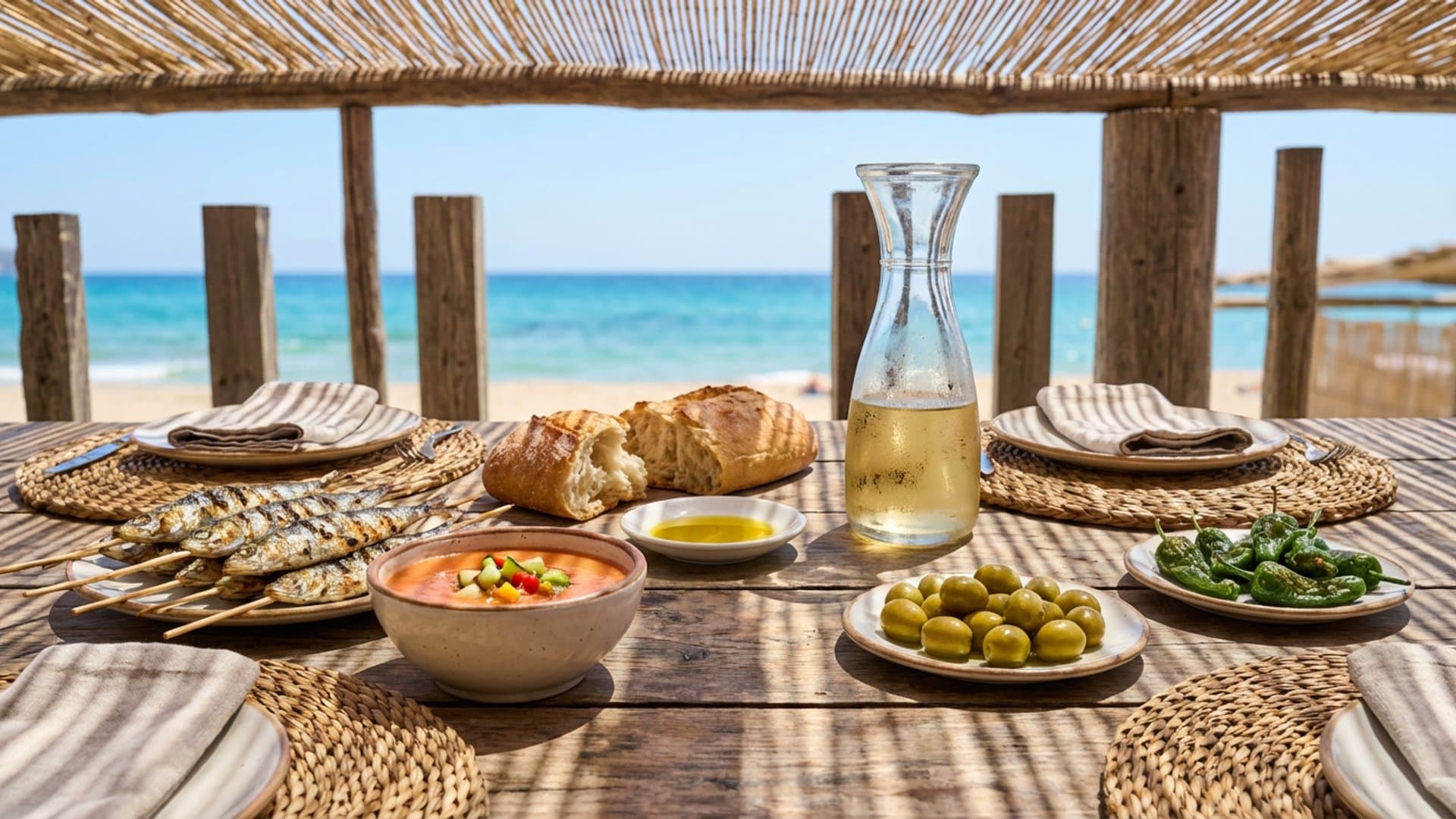
Dinner in Spain starts at 9:00 PM at the earliest — 9:30–10:00 PM is typical. It's lighter than lunch: tapas, a salad, a tortilla, or a few shared plates. A casual dinner for two at a good tapas bar runs €25–40 including drinks. A nicer restaurant dinner for two with wine: €50–80. The chiringuitos along Pedregalejo and El Palo are the iconic Málaga dinner experience — grilled fish, cold beer, feet almost in the sand.
Where to Eat by Neighborhood
Centro Histórico: The highest density of restaurants in the city. From centuries-old bodegas to contemporary tasting menus. The tourist traps are concentrated around Calle Larios and the cathedral — walk two blocks away and the quality jumps dramatically while prices drop. The area around Plaza de la Merced, Calle Granada, and the north side of the cathedral are the local favorites.
Soho: Málaga's most creative food neighborhood. Independent cafés, brunch spots, craft cocktail bars, and restaurants that experiment with non-traditional cuisine. The best place for international food (Japanese, Mexican, Middle Eastern) that's actually good rather than tourist-adapted.
Pedregalejo and El Palo: Seafood paradise. The chiringuito culture along the eastern promenade is Málaga's food identity. Espetos de sardinas (sardines grilled on cane skewers over wood fire), fresh-caught fish, seafood rice, and cold beer with a sea view. El Tintero in El Palo — where waiters auction dishes and you shout to claim your plate — is a must-visit experience.
La Malagueta: Limited dining within the neighborhood itself, but Muelle Uno (the port dining complex) is a five-minute walk, offering a mix of restaurants from seafood to sushi. Centro is ten minutes on foot.
Teatinos: Functional dining — chain restaurants, family-friendly options, and casual eateries near the shopping centers. Not a dining destination, but adequate for daily needs. For good food, residents drive or tram to Centro.
Grocery Shopping
Supermarkets: Mercadona is the dominant chain — good quality, fair prices, efficient. Lidl and Aldi offer budget options. Carrefour has the widest international selection. El Corte Inglés (Supercor) has premium products at premium prices. BM and Dia are smaller neighborhood options.
Local markets: The Atarazanas market in Centro is the star — fresh produce, fish, meat, olives, spices, and prepared foods in a beautiful iron-and-glass building. It's not a tourist market (though tourists visit) — it's where locals shop for the week's produce. Smaller neighborhood markets exist in most areas.
Specialty and international: International food shops selling American, Asian, Middle Eastern, and British products are scattered through Centro and Soho. Selection is limited compared to major capitals — don't expect a full Whole Foods equivalent. But Spanish supermarkets carry excellent olive oil, wine, cured meats, and fresh produce that more than compensate.
Next Step
If food culture is part of why Málaga appeals to you, Denise can help you focus on the neighborhoods where that daily lifestyle feels strongest.
If you want examples near markets, chiringuitos, and the kind of routine you are imagining, Denise can share selected properties from trusted partner agencies.
Published by Denise Guerrero
FAQ
What time do people eat in Málaga?
Breakfast: 8:00–10:00 AM. Lunch (the main meal): 1:30–3:30 PM. Dinner: 9:00–10:30 PM. These times shift later on weekends and in summer. The adjustment takes a couple of weeks, but most expats find the rhythm pleasant once settled. Eating dinner at 7:00 PM is possible but you'll be eating alone — restaurants may not even be open.
What is a menú del día?
A set lunch menu offered by most non-tourist restaurants on weekdays. Typically includes: a first course (soup, salad, pasta), a main course (meat, fish, stew), dessert or coffee, bread, and a drink — for €10–14. The quality and variety are remarkable for the price. It's the best way to eat well affordably in Málaga, and I still have a menú del día at least three times a week.
Can I find international food in Málaga?
Yes, though the range is narrower than in Barcelona or London. Soho has the best selection of international restaurants. Asian food (Japanese, Chinese, Thai), Mexican, Indian, and Middle Eastern options exist in Centro and Soho. American-style restaurants and brunch spots have multiplied. Specialty grocery shops carry imported items. Don't move here expecting a NYC-level international food scene — but you won't feel deprived.
Is the tap water safe to drink?
Yes. Málaga's tap water is safe and regularly tested. It can taste slightly chlorinated depending on your neighborhood and the time of year. Many residents use a simple filter jug (Brita) or buy bottled water (€0.30–0.50 for 1.5 liters). Spanish households commonly drink bottled water, but it's preference, not necessity.
What are espetos?
Espetos de sardinas are Málaga's most iconic dish: fresh sardines threaded onto a cane skewer and grilled over wood coals on the beach. The technique is specific to the Málaga coast and is listed as Intangible Cultural Heritage. You'll find espeto fires at chiringuitos along Pedregalejo and El Palo. Season is roughly April to October (when sardines are available). Cost: €3–5 per skewer.
Are there good vegetarian or vegan options?
Growing, but Málaga's food culture is heavily meat-and-fish-oriented. Several dedicated vegetarian and vegan restaurants exist in Centro and Soho. Most traditional restaurants can accommodate vegetarians with dishes like salmorejo, gazpacho, pimientos de padrón, tortilla española, and various vegetable stews. Vegan options are more limited at traditional spots but readily available at newer, internationally-oriented restaurants.
How does the food in Málaga compare to other Spanish cities?
Málaga's strength is seafood and chiringuito culture — the freshest grilled fish in the most atmospheric setting in Spain. Barcelona has a deeper and more diverse restaurant scene. Madrid has the strongest fine dining. Valencia has paella and rice dishes. San Sebastián is the culinary capital. Málaga competes on daily eating quality and value rather than high-end gastronomy. For everyday food — the lunch, the tapas, the market produce — it's hard to beat.
What should I know about tipping?
Tipping in Spain is not expected the way it is in the US. In restaurants, leaving small change (rounding up) or 5-10% for good service is appreciated but not obligatory. In bars and cafés, leaving a few coins is common. Service charges are not added to bills. Waitstaff are paid a standard wage — they don't depend on tips.
Where should I grocery shop?
Mercadona for reliable quality and price (visit during off-peak hours — it gets busy). The Atarazanas market for fresh produce and fish. Lidl for budget basics. Carrefour for international products. And your neighborhood's small shops — the frutería, the panadería, the pescadería — for the freshest daily items and the social connection that makes Málaga feel like home.
Is olive oil really that different here?
Yes. Spain produces roughly half the world's olive oil, and the quality of what's available in an ordinary supermarket is genuinely superior to what you'd pay a premium for in the US or UK. Extra virgin olive oil from Jaén or Córdoba (€5–8 per liter at the supermarket) is a daily essential, not a luxury ingredient. You'll use it on everything — toast, salads, cooking, drizzling — and you'll never go back.
Can I find good coffee in Málaga?
Traditional Spanish coffee (café con leche, cortado) is available at every bar. Specialty coffee (third-wave, single-origin) has arrived in Soho and Centro, with several excellent independent roasters and cafés. The specialty coffee scene is smaller than Barcelona's or Lisbon's but growing steadily. If your morning ritual depends on good coffee, you'll find it — particularly in Soho.
What's the best food experience I can have in Málaga?
Sunday lunch at a chiringuito in Pedregalejo or El Palo. Order espetos, a fritura malagueña (mixed fried fish), a salad, and a cold bottle of Verdejo or local Málaga wine. Sit outside with the sea in front of you and nowhere to be for the rest of the afternoon. It costs €30–50 for two people, and it's the meal that makes most visitors decide they want to live here. Contact me if you want a recommendation for the best spot.