
•
•--
🐕Dog-friendliness
🏖️Dog beaches
🏥Vet care
📋Import requirements
Living with a Dog in Málaga
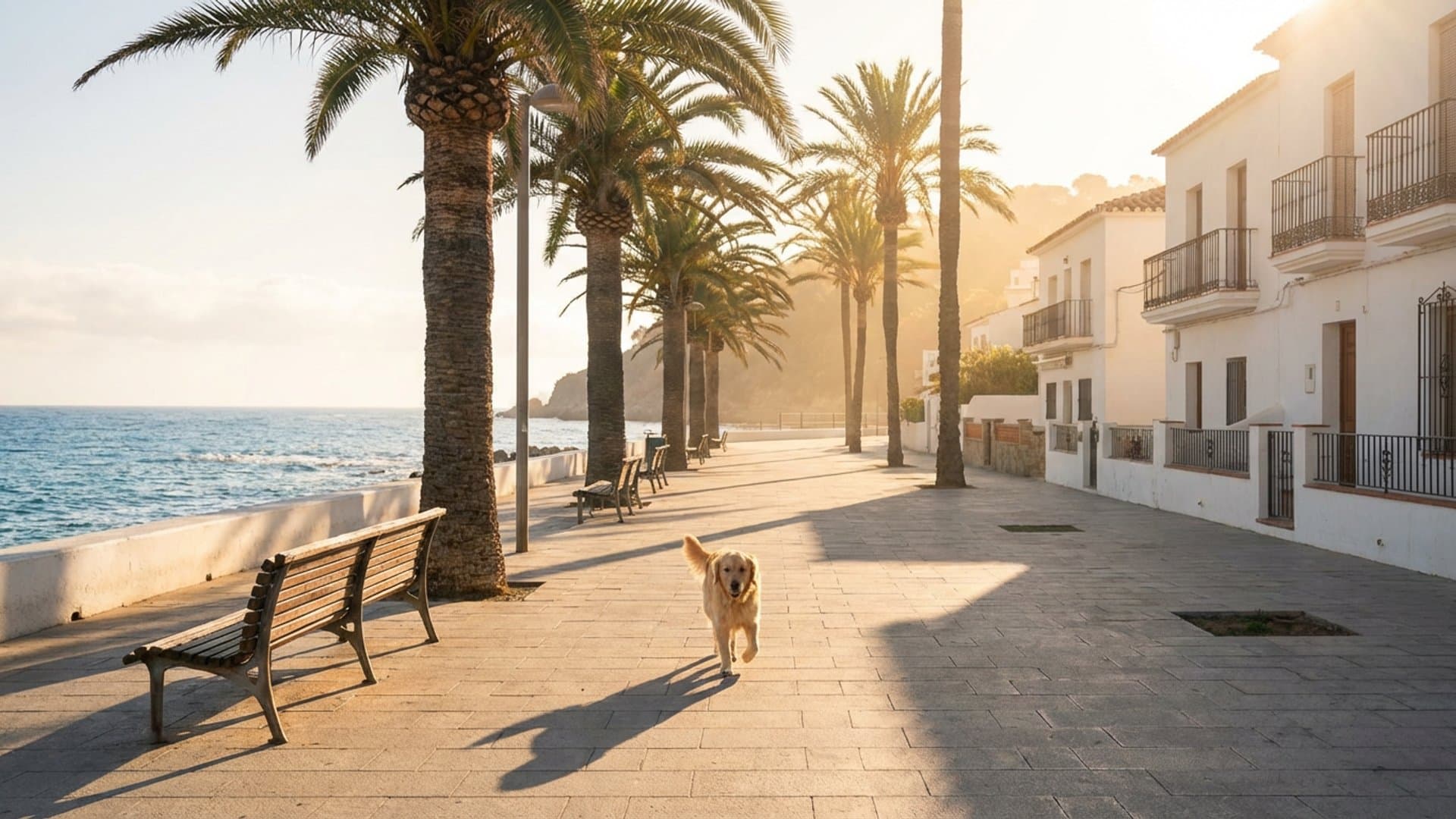
Málaga is a good city for dogs — not the best in Europe (that honor goes to cities with more parks and fewer beach restrictions), but solidly workable. The outdoor café culture means your dog sits with you at most terrace tables. The wide promenades along the seafront are perfect for walks. Vet care is excellent and affordable. And the climate means your dog gets outside year-round without battling snow, ice, or extended darkness.
That said, Málaga has some limitations that dog owners should understand before moving. Beach access is restricted during summer months, dedicated dog parks are small and not evenly distributed, and apartment living with a large dog requires specific consideration of space and community rules.
Bringing Your Dog to Spain
From within the EU:
EU pet passport (issued by a vet in your home country), microchip (ISO 11784/11785 standard), current rabies vaccination (administered at least 21 days before travel). No quarantine required. Straightforward.
From the US, UK, or other non-EU countries:
Health certificate issued by an accredited veterinarian within 10 days of travel (endorsed by your country's animal health authority — USDA APHIS in the US, DEFRA in the UK). Current rabies vaccination with titer test if required. Microchip. No quarantine for most countries, but specific rules vary — check the Spanish Ministry of Agriculture's current requirements for your country of origin.
Airlines: Most major airlines allow dogs in the cabin (under 8 kg including carrier) or in the hold (larger dogs). Book early — pet spots are limited per flight. Direct flights to Málaga from many European cities, the US (seasonal), and the UK make the journey manageable.
Dog-Friendly Neighborhoods
Best for dogs:
Pedregalejo and El Palo — The seafront promenade is ideal for dog walks, especially early morning and evening. The community is visibly dog-friendly — you'll see dogs at every chiringuito terrace. Off-season, the beach coves are usable (though technically restricted). Neighborhood streets are walkable and residential.
El Limonar — Private gardens are a major advantage for dog owners. Your dog has outdoor space without depending on public parks. The hillside streets are quiet and good for walks.
La Malagueta — The Paseo Marítimo is excellent for promenade walks. The beach is off-limits for dogs during summer, but the wide walkway and park areas compensate.
More challenging for dogs:
Centro Histórico — Narrow streets, no gardens, limited green space. A small dog in a ground-floor apartment with terrace can work. A large dog in a fourth-floor walkup will be frustrated. The nearest proper green space is the Alcazaba hillside.
Teatinos — Modern, flat, with some parks, but lacking the promenade walks and outdoor café culture that make the coastal neighborhoods more dog-friendly.
Beaches and Dogs
This is the biggest frustration for dog owners in Málaga. During summer months (typically June through September), dogs are prohibited from all main beaches. Outside these months, enforcement is more relaxed on the smaller coves, but the rules technically apply year-round on most beaches.
A designated dog beach (Playa de Guadalmar) exists near the airport — it's the only official year-round dog beach near Málaga city. It's functional but not close to the central neighborhoods.
In practice, many dog owners walk their dogs on the eastern beaches (Pedregalejo and El Palo coves) early in the morning before enforcement hours, particularly in the off-season. This is common but technically not permitted — know the risk.
Veterinary Care
Vet care in Málaga is excellent and significantly more affordable than in the US or UK. Routine vet visits cost €30–60. Vaccinations: €20–40 per shot. Spay/neuter: €150–300. Dental cleaning: €100–200. Emergency 24-hour vet clinics are available.
Several vets in Málaga speak English — useful for discussing complex conditions. Pet insurance is available (€15–40/month) and increasingly common among international pet owners.
Apartment Living with Dogs
Spanish apartment communities (Comunidades de Propietarios) cannot prohibit dog ownership in privately owned properties (this is established by Spanish law). However, community rules can regulate noise and behavior — excessive barking that disturbs neighbors can lead to complaints and, in extreme cases, fines.
Practical considerations: check for an elevator (carrying a large dog up four flights gets old fast), look for a ground floor with a small patio if possible, and verify that the building has a reasonable outdoor area or nearby park for quick bathroom breaks.
Rental tenants face more restrictions: landlords CAN include a "no pets" clause in the rental contract, and many do. If you're renting with a dog, confirm pet acceptance before signing and get it in writing.
Next Step
If you are relocating with a pet, Denise can help you weigh the neighborhood realities that matter before you commit to a property.
If you want examples that suit your dog as well as your own lifestyle, Denise can share selected properties from trusted partner agencies.
Published by Denise Guerrero
FAQ
Is Málaga dog-friendly?
Moderately to good. The outdoor café culture, mild climate, promenade walks, and affordable vet care are all positive. The main limitations: beach restrictions in summer, limited dedicated dog parks, and the practical challenges of apartment living with larger dogs. It's more dog-friendly than most Spanish cities but less so than Amsterdam or Berlin.
Can I take my dog to the beach in Málaga?
During summer (June–September), dogs are prohibited from main beaches. Outside summer, enforcement varies — some owners walk dogs on quieter beaches early morning. The official year-round dog beach (Playa de Guadalmar) is near the airport. Check local regulations as they can change year to year.
Are dogs allowed on public transport?
Small dogs (in a carrier) are allowed on buses and metro. Larger dogs are not permitted on EMT buses. The cercanías train allows dogs with a muzzle and leash. Taxis and Cabify drivers may or may not accept dogs — confirm when booking. Many dog owners in central neighborhoods simply walk everywhere.
How much does vet care cost?
A routine checkup costs €30–60. Annual vaccinations: €60–100. Spay/neuter: €150–300. Emergency visits: €80–150 (plus treatment). Dental cleaning: €100–200. Compared to the US or UK, vet costs in Málaga are approximately 40–60% lower for comparable quality of care.
Do I need pet insurance?
Not legally required, but increasingly recommended. Pet insurance in Spain costs €15–40/month and covers unexpected veterinary expenses, which can be significant for surgery or chronic conditions. Some policies also cover third-party liability (mandatory for certain breeds classified as potentially dangerous — PPP).
What are the rules for "dangerous breeds" in Spain?
Spain classifies certain breeds (including Pit Bull Terriers, Staffordshire Terriers, Rottweilers, Dogo Argentinos, and others) as Potentially Dangerous Pets (PPP). Owners must obtain a special license, carry liability insurance (minimum €120,000 coverage), register the dog with the municipal animal registry, and keep the dog leashed and muzzled in public at all times. The licensing process requires a background check and a psychological fitness certificate.
Can my landlord refuse to let me have a dog?
If you own your property: no, the Comunidad de Propietarios cannot prohibit pet ownership in private apartments. If you're renting: yes, the landlord can include a "no pets" clause. Many landlords in Málaga accept pets, but some don't — clarify before signing and get permission in writing. A pet deposit (one month's rent) is common.
What do I need to bring my dog from the US to Spain?
A health certificate endorsed by USDA APHIS (issued within 10 days of travel), current rabies vaccination, microchip, and an EU entry document completed by the border inspection team on arrival. The process is straightforward but requires planning — start the paperwork at least a month before travel. Your vet should be familiar with the requirements.
Are there dog parks in Málaga?
Yes, though they're smaller and fewer than you might expect from a city this size. Dog parks (pipicanes or parques caninos) exist in various neighborhoods, typically featuring a fenced area where dogs can run off-leash. They're functional but not spacious. The seafront promenade is where most dog owners get their daily exercise with their pets.
Where can I buy pet food and supplies?
Kiwoko (Spain's largest pet store chain) has locations in Málaga with a full range of food, supplies, and grooming services. Supermarkets (Mercadona, Carrefour) carry standard pet food. Online retailers (Amazon.es, Zooplus) offer wider selection and delivery. Premium and raw food diets are available through specialty shops.
Can I find a dog walker or pet sitter in Málaga?
Yes. Platforms like Gudog, Rover, and local Facebook groups connect pet owners with walkers and sitters. Rates are €8–15 per walk, €20–30 per day for sitting. During holidays, book well in advance — good pet sitters fill up fast, especially in summer.
What neighborhoods are worst for dogs?
Centro Histórico is the most challenging — narrow streets, no gardens, limited parks, lots of foot traffic and noise. High-floor apartments without elevators are impractical with any dog over 10 kg. If you have a large or active dog and want to live centrally, Soho (flatter, slightly more space) or La Malagueta (promenade access) are better choices than the historic center. Contact me if you're relocating with a pet and want neighborhood recommendations that factor in your dog's needs.