
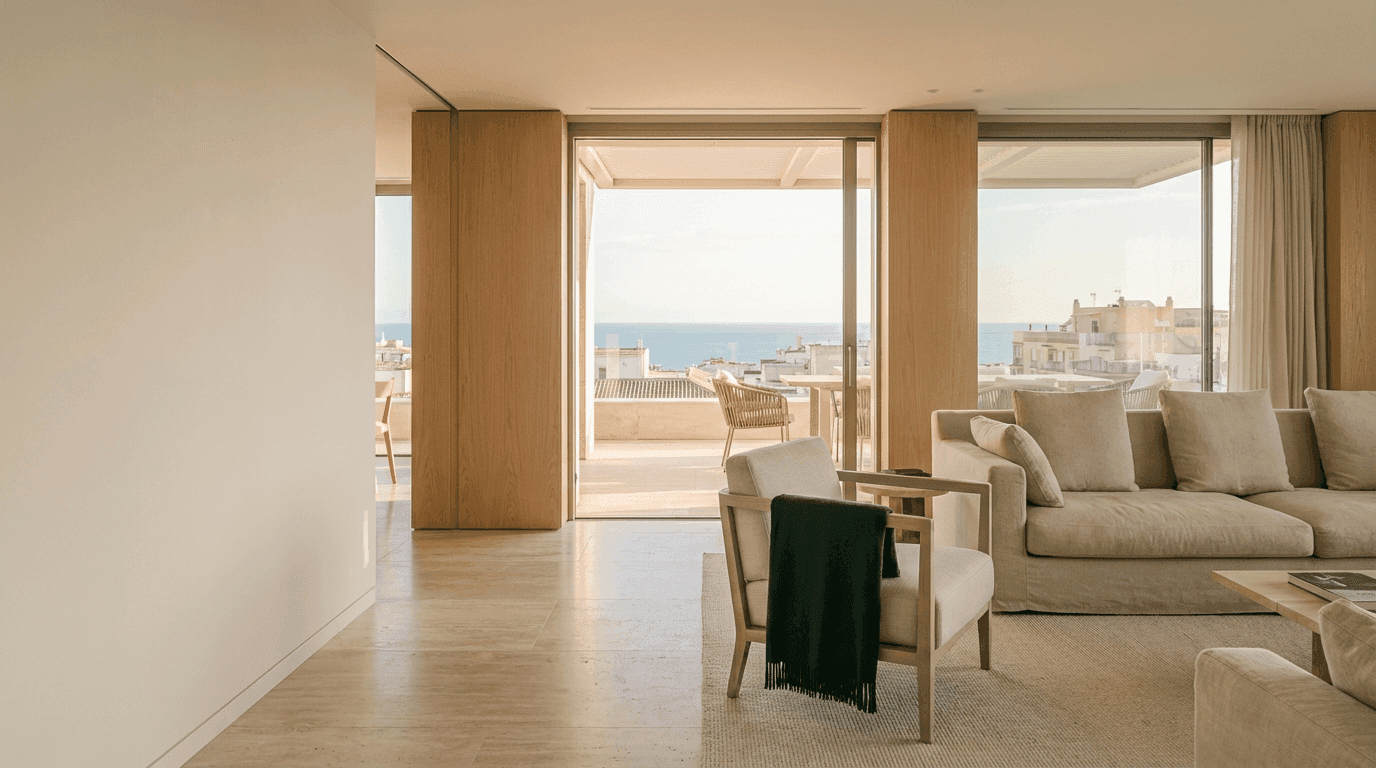
Selling in Soho: The Buyer Story That Tends to Resonate
Soho's buyer profile is narrower and more defined than Centro's — and that's an advantage for sellers who understand it.
The buyers drawn to Soho tend to care about how their home looks and feels, not just what it offers functionally. They notice material choices, appreciate considered lighting, and respond to spaces where the design feels intentional rather than assembled from a catalog. This doesn't mean they're buying luxury in the conventional sense — many Soho apartments are compact. What these buyers value is coherence: a space where everything works together.
Remote professionals are a significant segment. Soho's calmer streets, proximity to the waterfront, and walkable creative district appeal to people who work from home and want their daily environment to feel inspiring rather than purely functional. They evaluate layout, light, quiet, and outdoor space through a working lens — and Soho delivers on these criteria more consistently than most Málaga neighborhoods.
Second-home buyers are drawn to Soho for similar reasons — the neighborhood's character, its walkability, and the low-maintenance quality of well-designed apartments that work as a base for several months a year without requiring constant attention.
International buyers from the U.S., UK, and northern Europe are well represented. Many compare Soho to creative neighborhoods they know — and find it favorably distinct. The Soho neighborhood guide maps the micro-areas, street character, and daily rhythm that inform how each property should be positioned.
The Soho Design-Led Lofts collection shows the standard that design-conscious buyers are comparing against. Understanding what's in that collection — and why — helps sellers see their property through the buyer's eyes.
Design-Led Positioning: What to Highlight Without Exaggeration
"Design-led" is a specific claim. Denise uses it when it's earned — and positions honestly when it's not.
A property qualifies as design-led when the renovation goes beyond surface updates. The material palette feels intentional. The spatial logic is clear — rooms serve their purpose, circulation makes sense, storage is integrated. Natural light is treated as part of the design, not something that happens to come through the windows. Original elements — exposed beams, heritage tile, industrial windows — are preserved and integrated rather than stripped out.
If your property meets this standard, the positioning should make it unmistakably clear. That means photography and description that communicate design intent, not just attractiveness. Denise writes listings for design-led Soho apartments that speak to buyers who understand interiors — naming materials, describing how spaces relate to each other, and articulating what makes the renovation considered rather than merely new.
If your property is well-renovated but not quite design-led — good finishes, functional layout, current condition — that's a strong position too. The framing is different: turnkey readiness, lifestyle fit, and the neighborhood's character carry the narrative. Denise doesn't inflate a standard renovation into something it's not, because buyers who care about design will notice the gap during a viewing. Honest positioning protects both the seller's credibility and the buyer's trust.
What to lead with:
Material coherence — if the finishes work as a scheme, say so specifically. Light — how it enters, how it moves through the day, what the workspace feels like at midday. Spatial character — ceiling height, room proportions, the relationship between old structure and new intervention in converted spaces. Outdoor space — a terrace or balcony that extends the living area. Neighborhood context — the walk to the CAC, the waterfront, the morning coffee spot.
What to be honest about:
Compact size — many Soho apartments are smaller than Centro or Teatinos equivalents. That's not a weakness if positioned for the right buyer, but it shouldn't be hidden. Building limitations — older buildings without elevators, imperfect communal areas, or limited parking. Street noise — Soho's creative core has some evening energy that buyers should know about before viewing.
Presentation Checklist for Soho Properties
Soho properties reward careful presentation. The buyers attracted to this neighborhood have a trained eye — and the listing needs to match.
Photography with intent. Standard room-by-room documentation isn't enough. Soho buyers respond to images that show atmosphere: how light falls across a concrete floor, how the kitchen opens to the living space, what the terrace view looks like in the morning. Denise briefs photographers around the property's design narrative, not just its layout. Timing matters — Soho's orientation means some apartments photograph best in the morning, others in the late afternoon.
Show materials, not just rooms. If the apartment has distinctive finishes — polished concrete, exposed brick, custom joinery, heritage tile — the photography should capture texture and detail. Buyers who care about design evaluate these elements before they evaluate floor plans.
Let the proportions speak. Soho apartments often have generous ceiling heights, particularly in converted spaces. Wide-angle photography that distorts proportions undermines trust. Denise ensures photography is accurate — the space should look as good in person as it does in the listing, not better.
Style without over-staging. If the apartment is furnished, the styling should complement the design — not compete with it. If it's empty, the photography should capture volume, light, and material quality rather than trying to disguise an unfurnished space. Denise advises on whether light staging would strengthen the presentation, always proportional to the property's character.
Include the neighborhood. A few images of the immediate street, the walk to the waterfront, the nearest café — these ground the listing in daily life and help buyers who haven't visited Soho yet understand the context. International buyers building a shortlist from abroad rely on these cues.
Reaching International Buyers
Soho properties with strong design positioning attract interest well beyond the local market. Reaching those buyers requires presentation that works across distance and cultural context.
Listings that explain, not just describe. International buyers need to understand the neighborhood, the building, and the daily experience — not just the apartment. A listing that explains what the walk from the front door to the CAC feels like, or what the street sounds like on a weekday evening, gives a buyer evaluating from London or New York the context they need to shortlist. The guide to selling to expats and digital nomads covers what international buyers specifically evaluate.
Multilingual clarity. Listings presented in the buyer's language, with natural phrasing that reflects the positioning — not machine translation. For design-led properties, the language matters as much as the photography: the description needs to communicate intent and quality to someone who reads critically.
Responsive communication. International buyers expect prompt, specific answers. If they ask about internet speed, sound insulation, or the community of owners, they want clear information — not vague reassurance. Denise handles all buyer communication directly. American buyers in particular bring expectations shaped by a different transaction model — the guide to selling to U.S. buyers covers these dynamics.
Network and direct outreach. Denise's client base includes international buyers actively searching for design-quality apartments in Málaga. For Soho properties that match their criteria, direct presentation — before or alongside the public launch — puts the property in front of qualified, motivated buyers. The seller hub covers the broader distribution process.
Buyer Qualification and Discretion
Soho is a neighborhood where buyers and agents cross paths frequently. Managing viewings with discretion matters — particularly in buildings where only a few apartments change hands each year.
Qualified access. Denise confirms financial capacity, timeline, and genuine purchase intent before any viewing. Design-conscious buyers tend to be deliberate — they've researched, they know what they're looking for, and they're comparing your property against a short, curated list. Qualification ensures only serious buyers see your home.
Accompanied viewings with context. Every viewing is accompanied by Denise. In Soho, she extends the viewing beyond the apartment — walking the buyer through the immediate neighborhood, pointing out the morning light on the street, the café around the corner, the path to the waterfront. This contextual presentation matters for buyers who are choosing a daily rhythm, not just a floor plan.
Off-market option. If you prefer not to list publicly — whether for privacy, to limit disruption, or to test interest before a full launch — Denise can present the property within her qualified buyer network. Soho's limited inventory means well-positioned properties generate interest quickly, even without public marketing. Contact Denise to discuss this approach.
Structured feedback. After every viewing, you receive direct, specific feedback: what resonated, what gave the buyer pause, and whether they're progressing. In Soho, where design quality is the primary differentiator, this feedback is particularly useful — it reveals which elements of the presentation are landing and which may need adjustment.
Your Next Step
If you own a property in Soho and you're considering selling, the first step is understanding how your property should be positioned — who the most likely buyer is, what to lead with, and what preparation would strengthen the presentation.
Request a confidential valuation and Denise will assess your property within Soho's specific context — pricing, buyer profile, design positioning, and a structured plan to bring it to market.
Or book a selling strategy call to start with a conversation. No commitment either way.
Considering other neighborhoods? The selling guides for Centro Histórico and Teatinos cover what makes each area distinct for sellers. The Centro vs Soho vs Teatinos comparison maps the differences in detail.
Published by Denise Guerrero
FAQ
What kinds of buyers tend to be drawn to Soho?
Design-conscious buyers who notice finishes and respond to considered spaces, remote professionals who want a walkable creative neighborhood with good light and calm streets, and second-home buyers drawn to Soho's character and low-maintenance appeal. International buyers from the U.S. and northern Europe are well represented. The Soho neighborhood guide maps the micro-areas and street character in detail.
How do you position a "design-led" home without over-claiming?
By being specific about what earns the label: material coherence, spatial logic, light as a design element, detail quality, and integration of original architectural features. If a property meets this standard, the positioning names it clearly. If it's well-renovated but not design-led, Denise frames it around turnkey readiness and lifestyle fit instead. The Soho Design-Led Lofts collection illustrates the benchmark.
What should I improve — or not — before launching?
Declutter and clean first. Then assess whether any element undermines the property's positioning — a dated fixture in an otherwise considered bathroom, poor lighting in a room with good bones. Denise advises specifically as part of the valuation. For design-led properties, less intervention is often better — over-staging or hasty updates can disrupt the coherence that makes the space appealing.
How do you ensure photos feel premium and real?
By briefing photographers around the property's design narrative, not just its layout. Timing is planned around light conditions specific to the apartment's orientation. No wide-angle distortion, no artificial enhancement. The goal is imagery that a design-conscious buyer trusts — the apartment should look exactly as good in person.
How do you handle viewings discreetly?
All viewings are accompanied, scheduled, and limited to qualified buyers. If you prefer off-market, Denise presents the property within her network before any public listing. In Soho, where buildings are intimate and neighbors are aware, this controlled approach protects your privacy and the property's positioning.
Should I stage or keep it minimal?
It depends on the property. Furnished design-led apartments usually present best as they are — provided the styling complements the space. Empty apartments can benefit from light staging to communicate scale and function, but over-staging a Soho apartment with generic furniture can work against it. Denise advises based on what strengthens the specific property's presentation.
How do you target remote professionals?
By positioning the property around the criteria they evaluate: workspace viability, fibre internet, natural light, sound environment, and walkable daily life. Denise writes listings that speak directly to this profile when the property supports it. The digital nomads guide covers how remote professionals think about Málaga — that perspective informs the listing strategy.
How does Soho compare to Centro for buyer interest?
Soho attracts a narrower, more design-focused buyer. Centro offers more variety, more density, and more street-level energy. Remote professionals are drawn to both, but for different reasons — Soho for its calmer rhythm and creative identity, Centro for its plug-in convenience and cultural richness. The neighborhood comparison covers the differences in detail.
What should I prepare before requesting a valuation?
Basic property information: location, size, rooms, condition, and renovation history. Photos help. If you have the nota simple, energy certificate, or community-of-owners minutes, they're useful but not required to start. For design-led properties, any information about the renovation — the firm, the materials, the timeline — helps Denise assess quality and provenance. Request a valuation to begin.
Can you market quietly or off-market?
Yes. Denise can present Soho properties to qualified buyers within her network before — or instead of — a public listing. Soho's limited inventory and specific buyer profile mean well-positioned properties often generate interest through targeted outreach alone. Contact Denise to discuss whether this approach fits your situation.
What questions do international buyers typically ask about Soho properties?
Internet speed and provider, noise levels at different times, community-of-owners fees and governance, building maintenance history, and how the neighborhood feels in the evening versus the morning. They also ask about walkability to specific amenities — the waterfront, groceries, the airport bus. The selling to expats and digital nomads guide covers the full range of international buyer expectations.
What's the best next step if I'm considering selling soon?
Start with a valuation. It's confidential, no obligation, and it gives you a clear picture of your property's position — pricing, buyer profile, and what preparation would be worthwhile. Many sellers reach out to Denise months before they're ready, which allows time to plan without pressure.